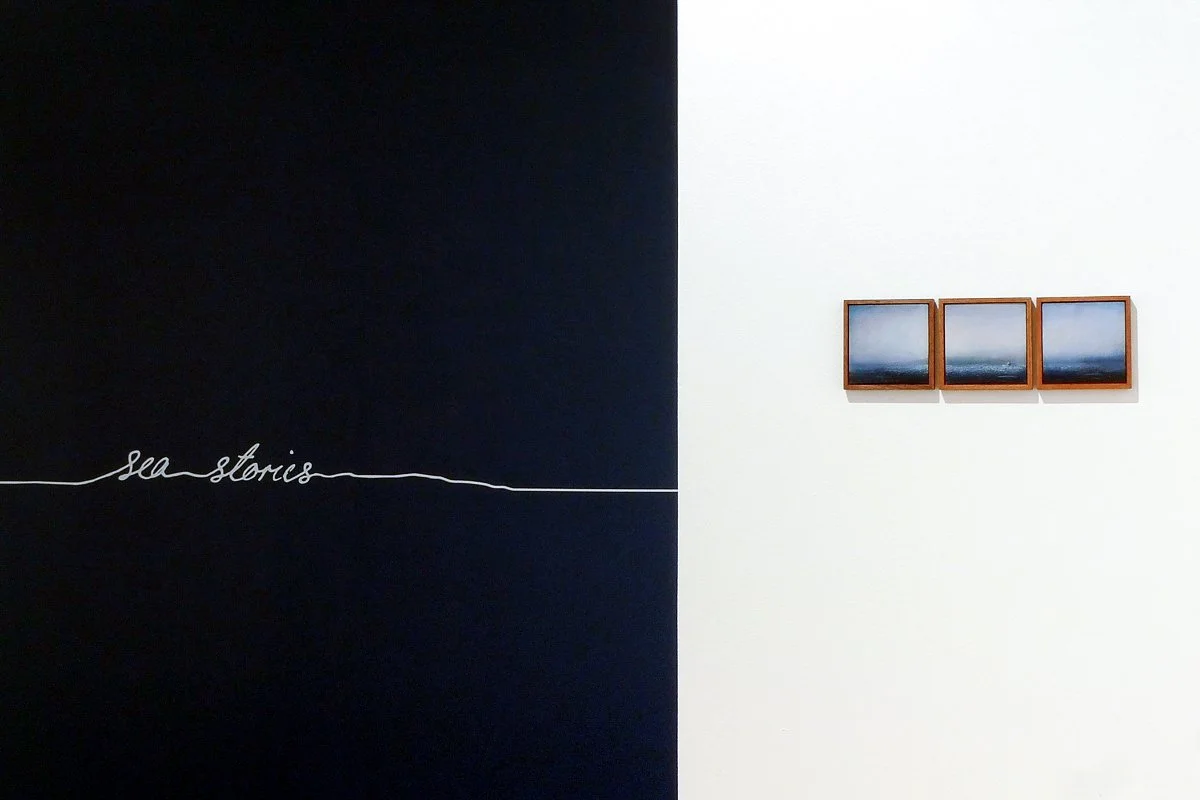
sea stories | 2012
Carnegie Gallery
-
sea stories
Karin Beaumont, Michaye Boulter, Sally Brown and Linda Fredheim.
Curated by Helen Norrie.
sea stories grew from a collaborative project for the Alcorso Foundation fundraising event coordinated by Pippa Dickson in 2010. The pairing of a furniture maker/painter; and jeweller/object artist seeded an on-going friendship, both professional and personal. This collection of personal stories and critical reflections catalogues the range of associations and influences of individual and shared sea stories.
Carnegie Gallery, Hobart
October, 2012
The sea stories Journey
sea stories began long before our first meeting in Michaye's studio at Salamanca on a fine spring morning a year ago. Each of the artists have a long association with the sea: from the distant Atlantic, Pacific and Southern Oceans, to local bays of Bruny Island and closer estuarine environs, in the margins where the land and sea meet. The experience of the ocean/sea/river leaves visceral traces that underpin their work in a range of ways, and this exhibition provided a platform to explore and expand this sphere of influence.
All the stories start from childhood: Michaye grew up on a boat, sailing the world with her parents and younger sister; Karin's dreams of journeys to Antarctica led to her career as a scientist on expeditions in the Southern Ocean; Linda's summers at the family shack involved days of pottering around on boats; while Sally explored the wilderness of Melaleuca in clinker rowing dinghies.
The four artists were introduced through a collaborative project for the Alcorso Foundation, in which they worked in pairs to produce a single object. Linda created a miniature Sea Chest that was lined with an exquisitely fine painting by Michaye, while Karin and Sally combined their respective design sensibilities and technical skills to create the organic-shaped sculptural vessel, Upwelling. Sea stories aimed to extend the creative process that had been initiated by these earlier projects, but it was intended that the process of collaboration would develop organically, rather than be specifically prescribed.
The combination of jeweller, painter, object and furniture designers proffers a diverse range of skills, but each shares similar sensibilities and a generosity that allowed inspiration to be drawn from each other's work. The collective experience and love of the sea provided a raft to float discussions and from which to chart a journey of discovery.
COLLABORATION
sea stories developed through a series of visits to each other's studios - once a month, with tea and cake. The conversation began with a discussion of memories of boating adventures, and from these recollections a recurring idea of 'vastness and intimacy' arose, highlighting the contrast between the scale-less expanse of the ocean, and the tiny dimensions of the vessel that provided carriage for the journey. It was resolved that each artist would create work that addressed this idea, which would provide a catalyst for on-going discussions.
When we started this collaboration twelve months ago, I had a vague idea of where we might end up, but not how we would get there. I didn't expect that the journey would be so fascinating, nor the outcomes so rewarding. Listening to each other's stories was the easy part. Learning how to let go of one's ideas and see the work through the eyes of another was harder. Taking the time to see the way the others create their work, allowed me to develop objects that explore the forms, themes and ideas that arose journeys without destination, collecting and arranging, seeing meaning in pattern, intimacy within vastness. LF
I have enjoyed the organic approach to the collaborative aspect of this project. We have not felt any obligation to do the obvious and each pair up with one another. Rather, it has been a process of sharing stories, thoughts, ideas, and techniques, of seeing, appreciating and finding connections within one another's work. It has been an unforced process, occurring over time, through conversations and through bringing work together. SB
Most of the work I have developed for this project has been produced in response to something that came out during our series of studio visits and conversations-stories, techniques, images or objects. Serendipitous events changed things. The process at the time seemed quite intuitive, but looking back, I can now see how each piece developed and why. LF
STORIES
Narrative ideas lie beneath the surface of all the work, but the intention was not to provide direct representations of places or ideas, or to literally chronicle events or experiences. sea stories can be understood variously as the process of conversation and sharing ideas, techniques and inspiration; the generative ideas that inspired work; and the associations that may be 'read' by the viewer.
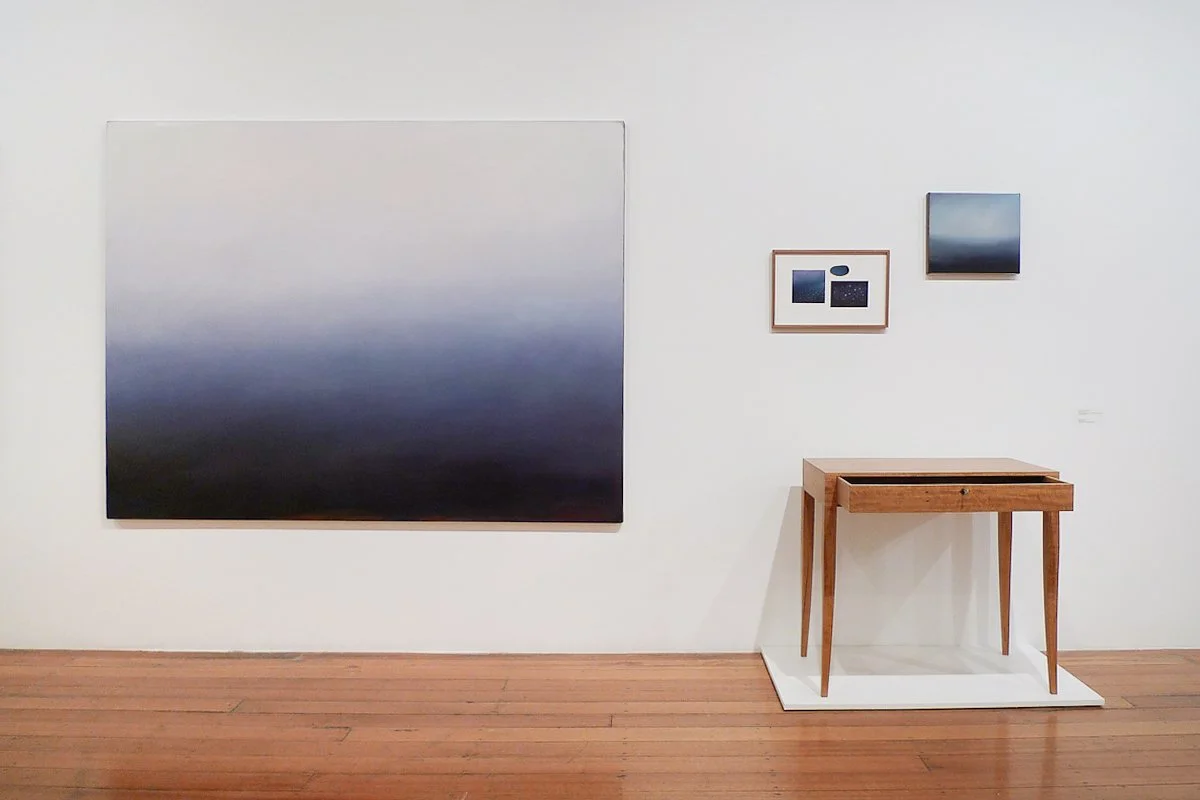
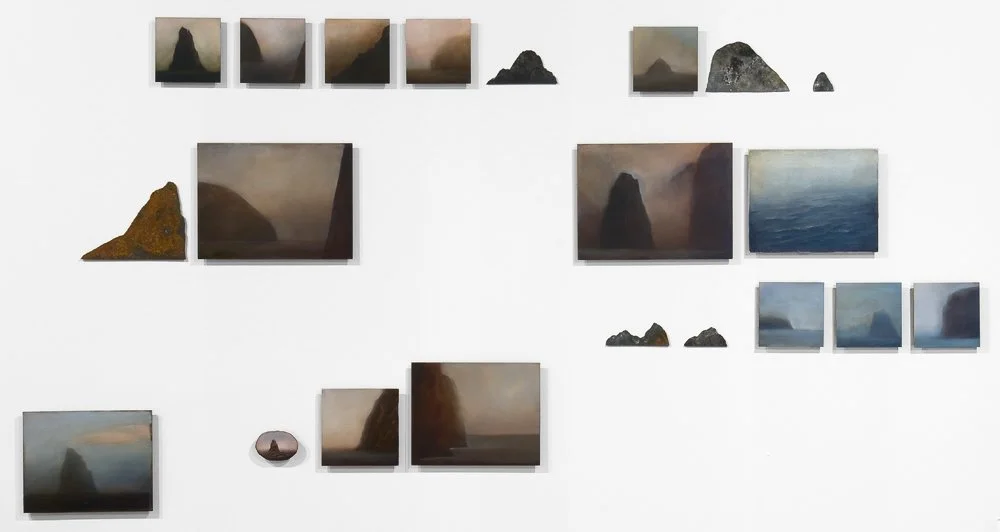
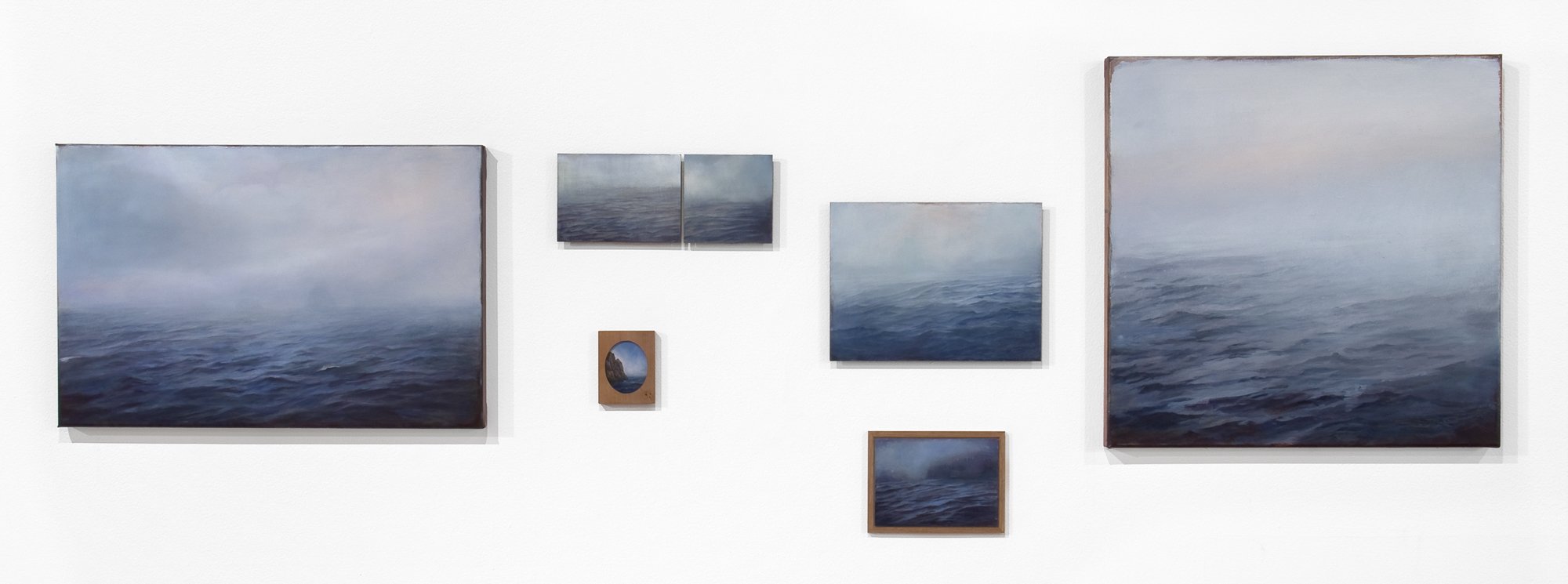
Whether I am painting large seascapes, visceral and full of space, or the small snippets of unfiltered memories, my work is about my psychological relationship to nature. Personal and unashamedly subjective, they are romantic and moody. MB
As we worked and talked it became apparent that the sea stories were less about creating specific narratives or journeys and more about creating a space for the work to tell its own story or for the audience to reflect on theirs.
In my clusters of paintings I have deliberately left empty ones to provide space to reinvent the more informed ones. Here I am also reflecting on the process of memory, how something can be there one minute and gone the next leaving you with just a feeling. MB
Reflections on the duality of 'vastness and intimacy' led to the development of a series of ideas that were explored both individually and collaboratively. Inspiration, both tacit and explicit, was drawn from the contrast between the precision of charts and navigating equipment and the enormous swells and distant horizons of the ocean; the experiential shift of stepping out of the weather and into the warm dry cabin interior; and temporal shifts created by careful records of tiny moments of everyday life that become memorialised in letters and ships logs. Although these ideas provided a catalyst for inspiration, the work was not intended to be symbolic or representative, but embedded with more abstract associations.
As vessels for memory, objects provide a channel to our past. Often outlasting us into the future they leave others to ponder their meaning, adopt them and layer them with their own stories. KB
INSPIRATION
Each artist is careful and meticulous, and they were keen to use the collaboration as an opportunity to subvert these tendencies, and to work quickly and loosely. Michaye embraced this process, producing paintings of various sizes and scales, and using different materials and techniques that were both influenced by and provided the inspiration for the work of others.
In recent times my painting practice has become quite refined, in painting for sea stories I wanted to allow myself to leave the work a little unfinished, accepting this as part of the work's directness and honesty. By disturbing my usual working methods, painting on textured backgrounds, working with different materials, or juxtaposing my work against others, I have been able to see possibilities that were otherwise unforeseeable. MB
I am inspired by Michaye's small, not-so-precious 'studies' on board and paper. I do a similar sort of thing; I make small test pieces to try out ideas and to experiment with materials. They are ephemeral steps on the way to a resolved piece. I have never given these 3D 'studies' much credit in their own right. This project, and my appreciation of Michaye's multitude of tiny paintings, has made me realise that these little, sculptural pieces are a valid aspect of my practice. SB
Michaye portrays the landscape of the forms that inspire my creations and we share the intention that the small objects we create provide an intimate window to something much larger. Our work merges together in part due to my love of using negative space. I am drawn to open spaces, irregular lines, and organic forms. I am also drawn to symbols and pattern and marvel at how these sometimes mirror the shapes of plankton. Although the term 'jewellery' often conjures up images of sparkling glamour containing diamonds and other precious stones, I think of my work as intimate objects alluding to precious stories, life- forms, and connections with the natural world. KB
MEMORIES
Associations with 'vastness and intimacy' arose from a discussion of how personal space on boats is created by specific objects and activities, and this inspired one of Linda's tables. Imagining a passenger in her cabin penning a letter to absent loved ones she created Memento, a small suitcase-sized writing desk, with a locked drawer that opens to reveal a silk lining studded with pearls arranged in constellations, which simultaneously resemble the night sky, navigation maps and the image of the glistening moon-lit ocean.
Like the light from distant stars that may reach us after those stars have faded, a hand written letter captures a moment in time and space which can be evoked each time the letter is read and re-read. LF
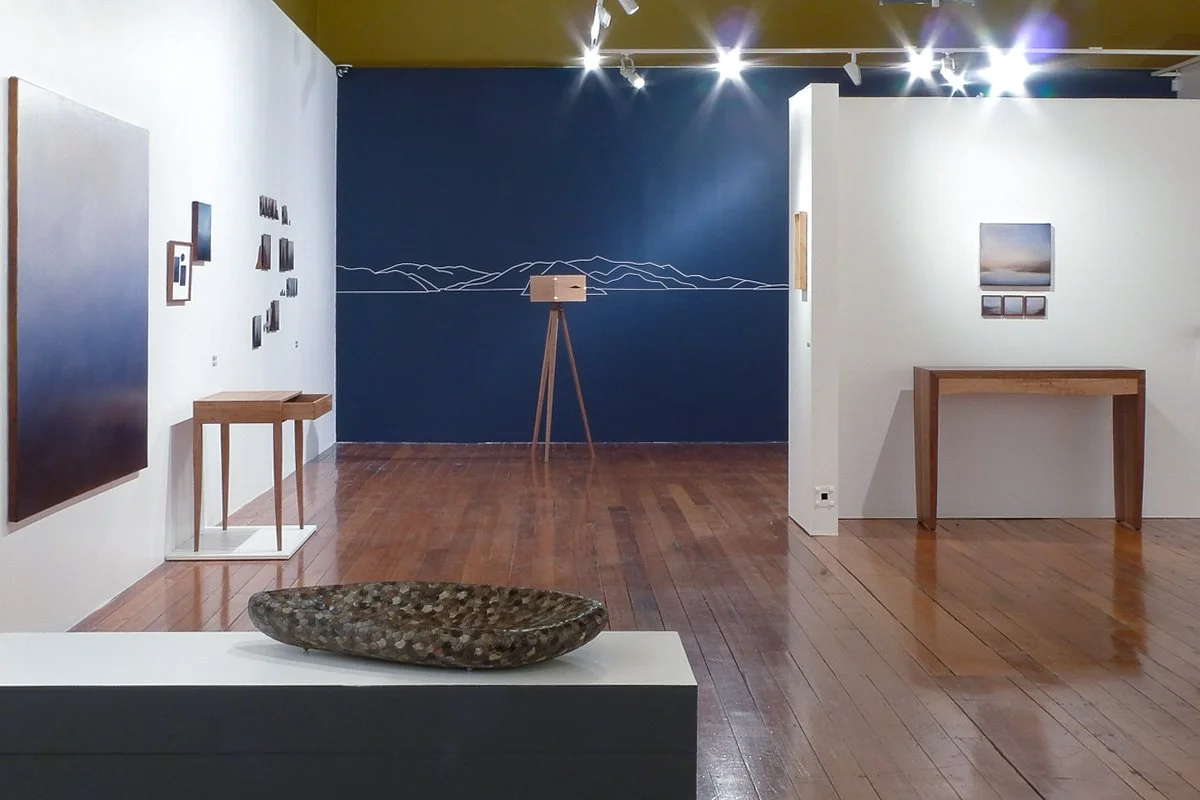
The association of the vastness of the ocean/sky is encased within a tiny box and the illusion of distance and space was extended in Passage, in which Michaye's miniature sea scape lines the inside of Linda's small box, which is mounted on tripod to resemble a telescope, Victorian surveying equipment, or a box camera.
Linda's attention to the inside of things immediately induced in me a desire to paint small worlds within. Altering the way we normally see the landscape, as something outside of ourselves, to something private and collectable. MB
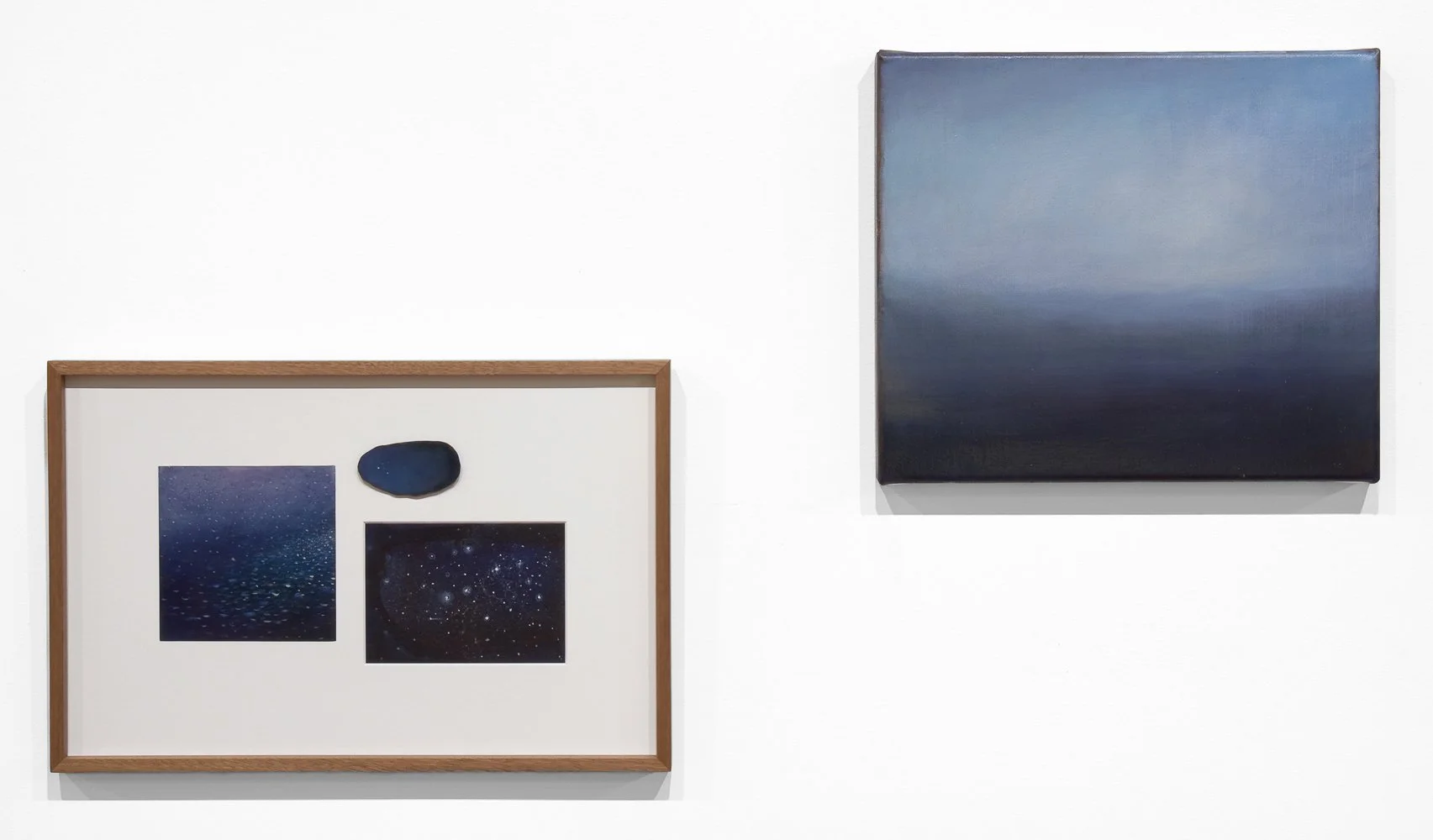
Long journeys at sea were traditionally occupied by activities of making; the concentration of whittling pipes, carving conch shells to create scenes or cameos provides an intimate space of occupation within the boundless expanse of the ocean. The objects contain stories that are portrayed through images, and the cameos create delicate mementoes that allow one to hold close someone they know and love. Michaye's paintings are like 'cameos of the sea'. Although pictorial, they are essentially spatial and emotional rather than replicas or exact representations of specific locales.
This association is taken literally in a series of paintings on metal 'pebbles' which were shaped by Sally and framed by Karin with delicate silver borders. In small series of paintings of the sea in the bay at Bruny Island Michaye creates a memento of her father. These are framed by Linda in delicate timber borders to form a triptych of memory.
COLLECTIONS
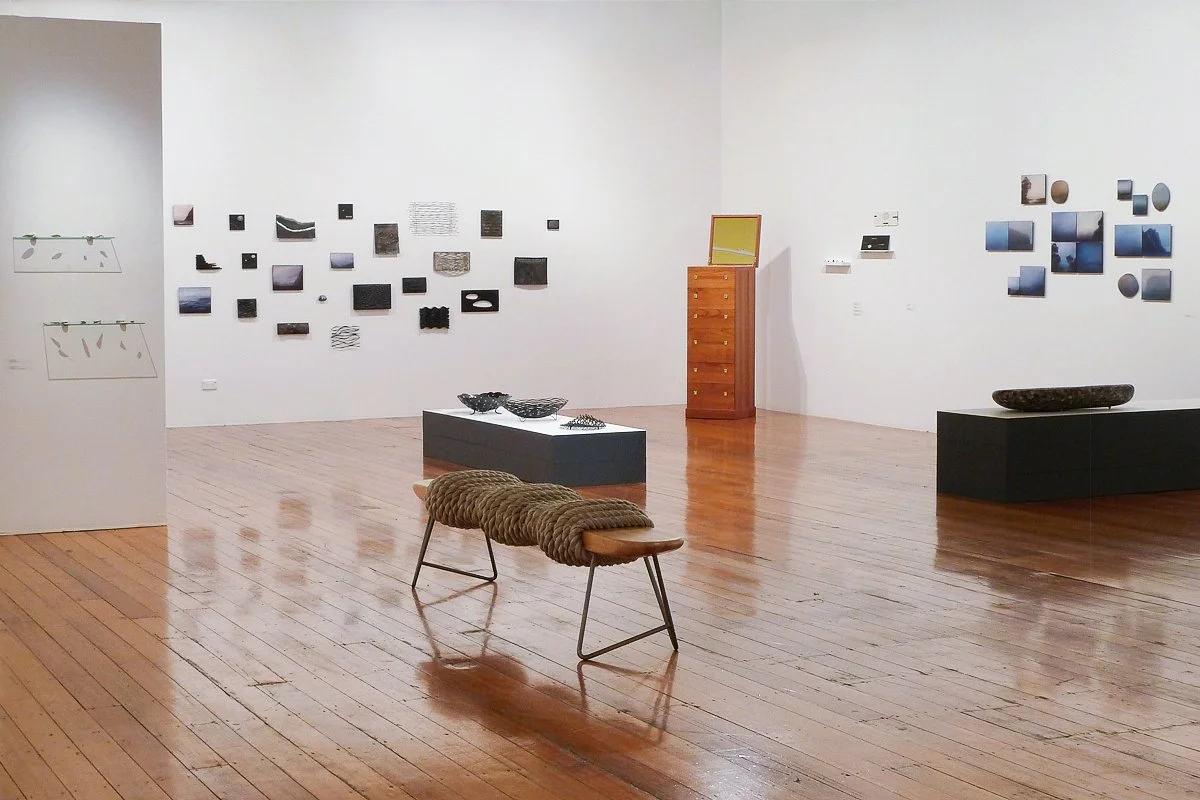
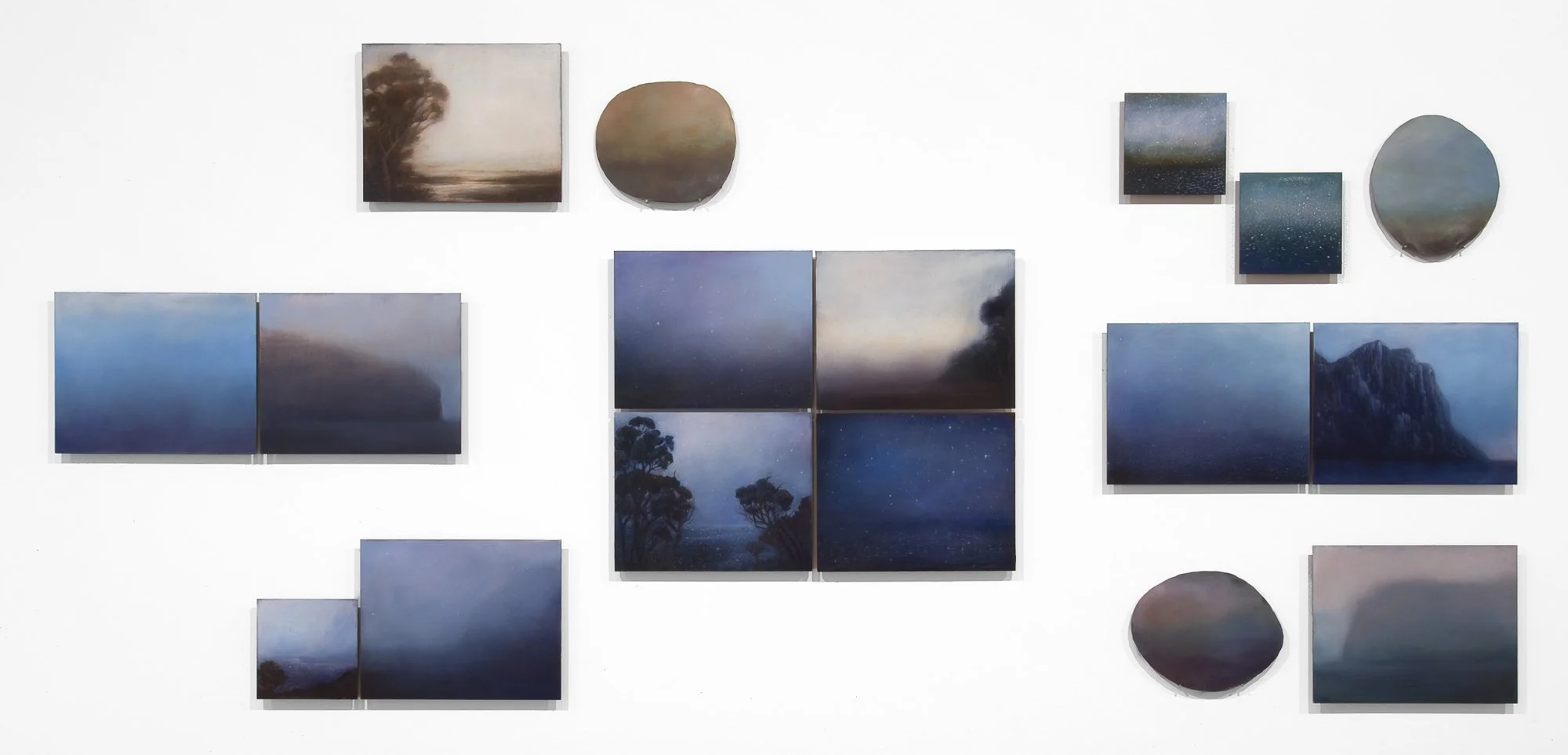
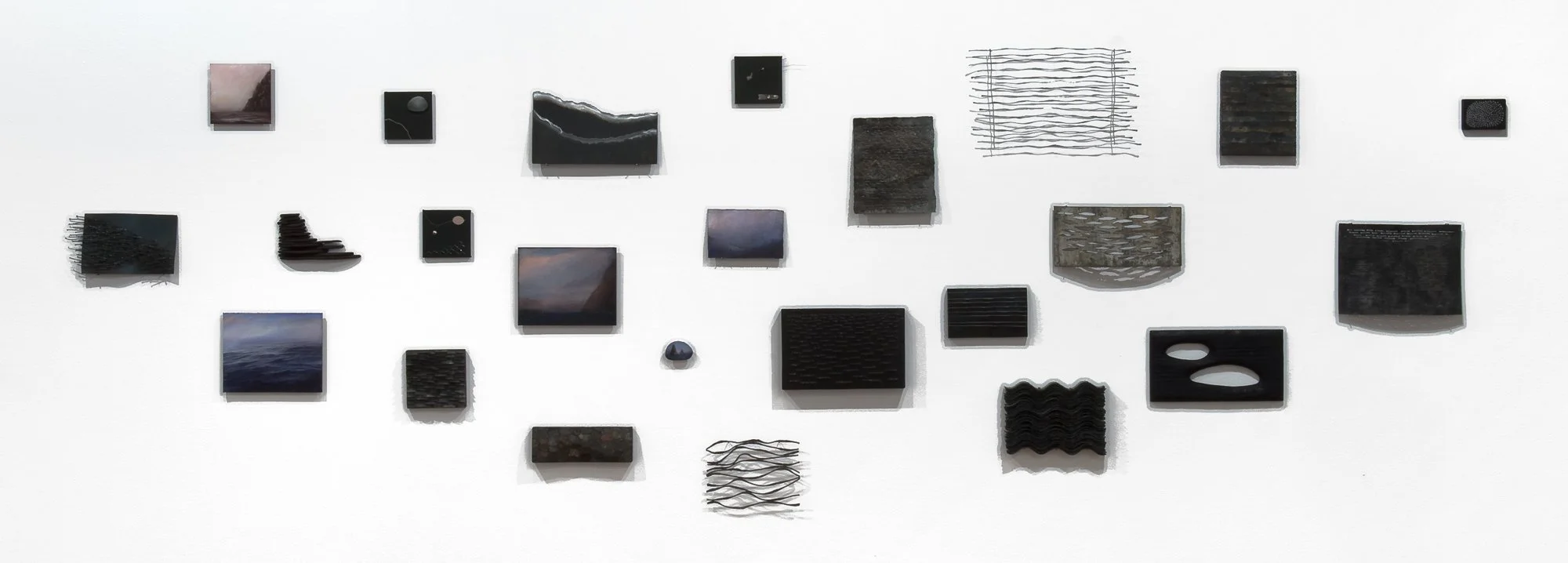
sea stories is a collection of overlapping ideas, objects, materials, forms and memories. Studio visits involved each artist laying out the new work they had developed, and this formed the basis for discussion, and the springboard for new ideas. Throughout the conversation objects and paintings were continually rearranged, like a treasured shell collection. Sally, Karin and Michaye's work was conceived as sets of objects, some experiments, some finished pieces.
I view the objects I make as part of a larger landscape of pieces relating to one another. My work is inspired by the shapes, forms and movement of microscopic plankton. By placing the objects together in a landscape form I feel it gives them additional life and context. KB
I have always been fascinated by the way most of us collect and treasure objects. I suppose that's why I like to make cabinets, drawers and boxes. They are places to keep these things safe, not always on display, but ready for an expected or chance encounter, when they can release the memories and emotions we have invested our objects with. LF
The exhibition resembles a wunderkammern or cabinet of curiosities, an assortment of objects that are valued both collectively and individually for the stories they embody or the knowledge gained through their making. There is no distinction between precious/non-precious, finished/unfinished as each is part of an on-going experiment of boundless possibilities. While the significance of each piece is particular to its maker, displaying each in the company of others they take on a new life, allowing the observer to actively engage with the dynamic possibilities of meaning and association.
Objects are important to us when we go to sea, particularly those that remind us of loved ones or home. We are often given objects by those close to us and they become like talismans. They offer comfort, security and intimacy in a turbulent, ever-changing and exposed environment. KB
PATTERNS
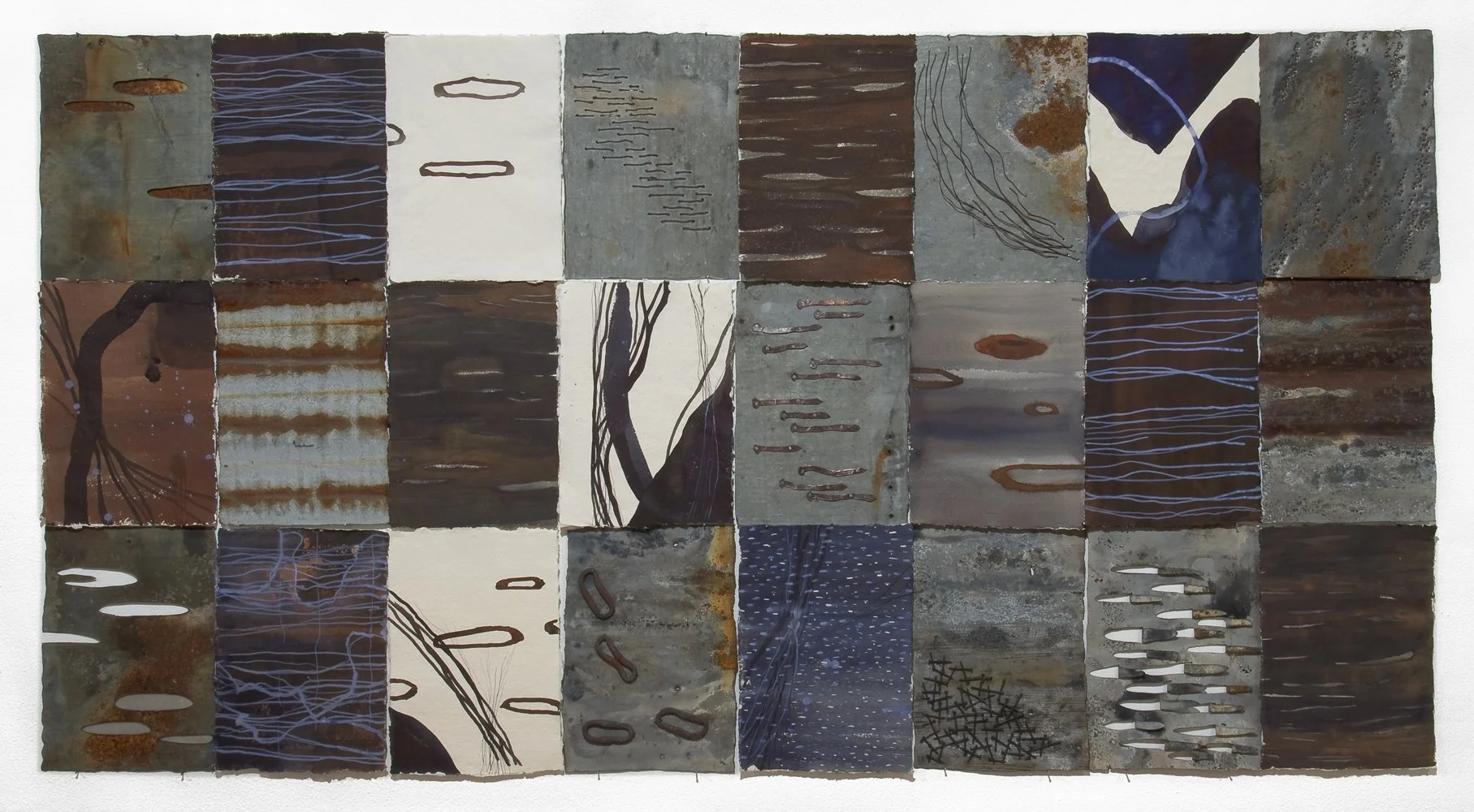
Recognition of recurring patterns also provided a source of inspiration. Organic shapes and flowing lines merge and transform, providing a fluid blend of intuitive and technical. While many of the works are individual explorations that are influenced by shared conversations, several key works were made collaboratively, with elements passed from one to another in an additive, serendipitous process.
Patterns and textures are a fundamental aspect of my art practice. There is something appealing about the repetition of an action, or multiple pieces brought together to build up an object. It can be cathartic, or meditative to work in this way-like knitting or stitching. It seems it is human nature to recognise-even to seek out- something familiar in otherwise unfamiliar, seemingly abstract objects and patterns. SB
I am inspired by the pattern and repetition in Sally's work, but while Sally's patterns and textures originate intuitively, mine usually have roots in some form of research either scientific or historical. KB
I interpreted Karin's work as otherworldly, her shapes both foreign and oddly familiar. I instantly wanted to hold these little shapes up and see the world anew through them. I was inspired by Sally's trust in materials and her paired back simplicity of pattern, and my response came in the form of simple ink paintings of coastlines and navigation lines. MB
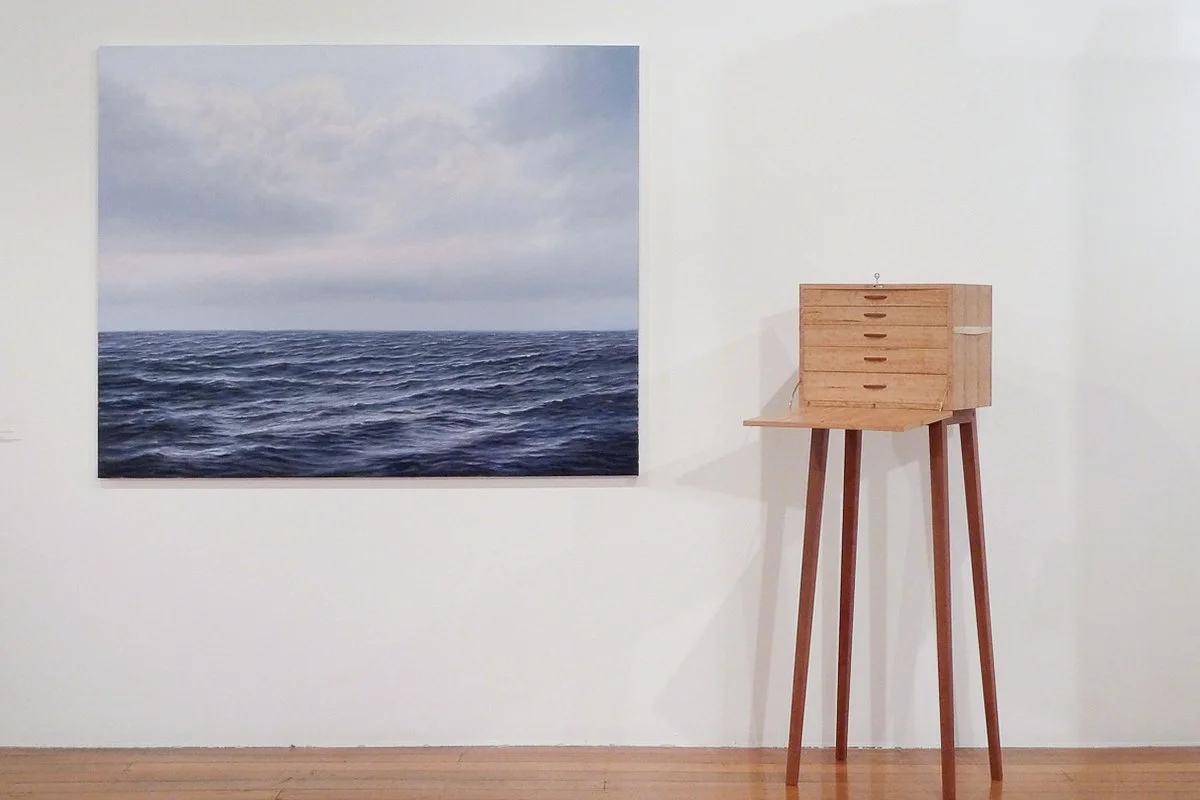
The recurring forms of Karin and Sally's work led to Michaye experimenting with a series of water colour paintings. These formed the contents of Linda's Navigate, a portable suitcase-like box mounted on a stand, which unfolds to reveal a series of drawers. This work extends their shared fascination with small objects containing the landscape, which is considered to be personal and collectable.
LOOKING BACK
The resonating effect of the collaborative process influenced the artists in diverse ways, producing new work and ways of working. It seeded an interesting mode of collective engagement, which allowed a degree of independence to find and create connections between ideas and techniques, form and material, object and memory. Sally observes that, 'Linda's work centres on the historical and navigational, Michaye's the evocative and emotional and Karin's scientific and environmental; all very human connections with the sea,' and her own work is both intuitive and systematic.
I have always thought about my practice in terms of form, and the connections that can be made between my objects and the patterns and structures in nature. The sea stories project has caused me to contemplate more personal, or human connections. Sharing our stories has caused me to consider my own experience of the sea and how that might re-emerge in my work. Although our work is very different in many ways; we each have a distinct style, use different materials and methods and each have a different approach to the process of making, there are connections that thread our work together-shapes, forms, colours, patterns and stories link together so satisfyingly, making it all seem to belong. The way the conversations surrounding the work have unfolded has been a delight. Someone's work might spark a memory; the sharing of that story might bring to mind a similar experience to another, which in turn might inspire an idea or a scribble in a sketchbook. Connections are constantly revealing themselves. SB
The process of making sea stories reminds me that 'to an artist, art is a verb'. Nothing is finished until it leaves the studio-ideas are constantly abandoned and new work invented. Art exists in the making, and in the end art exists in the viewing. Sometimes we made connections in the most unlikely of ways while other times the work seemed destined from the beginning. Allowing the process without forcing collaboration was a leap of faith that required the awareness that our best work lies just outside of our imagination. MB