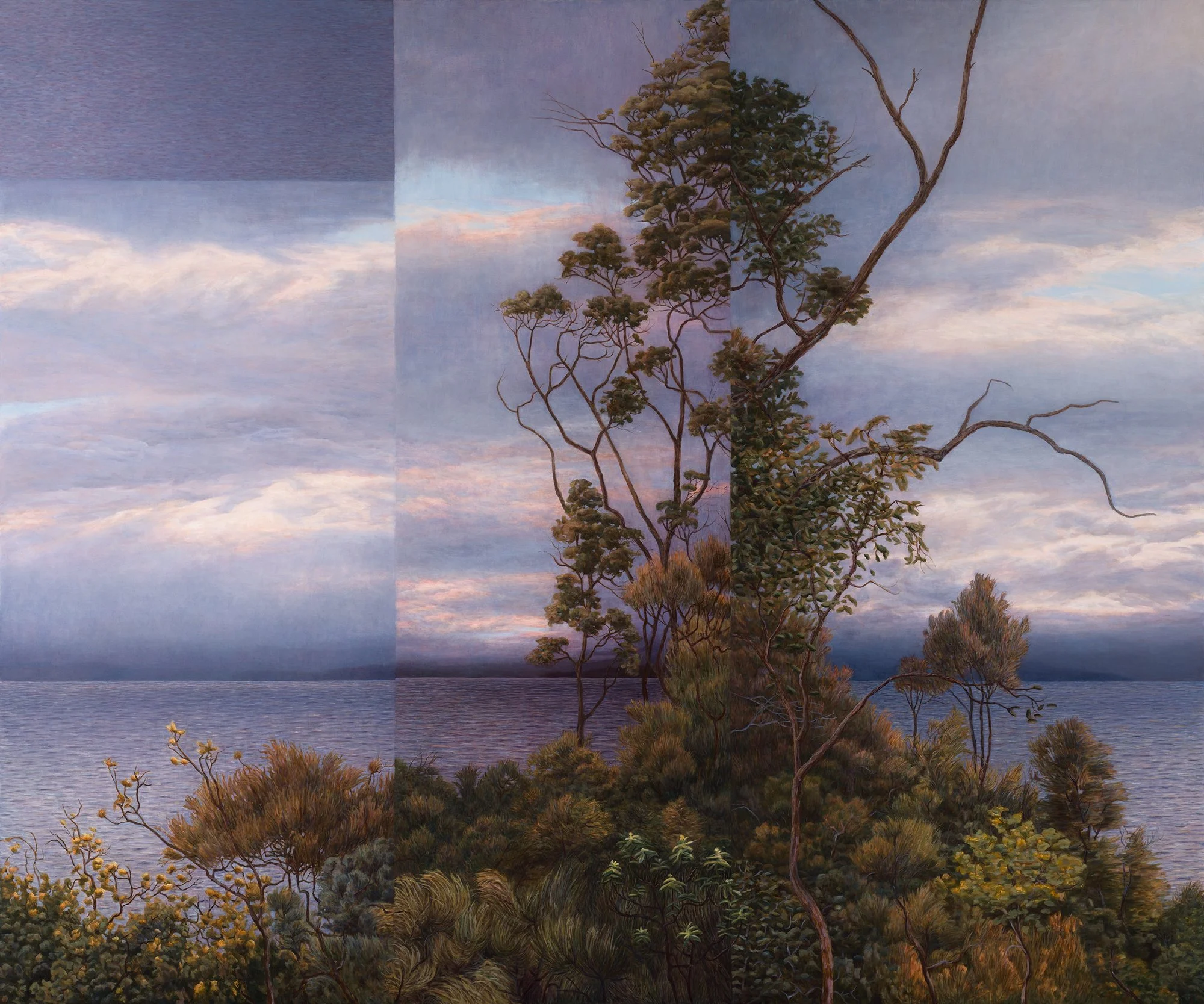
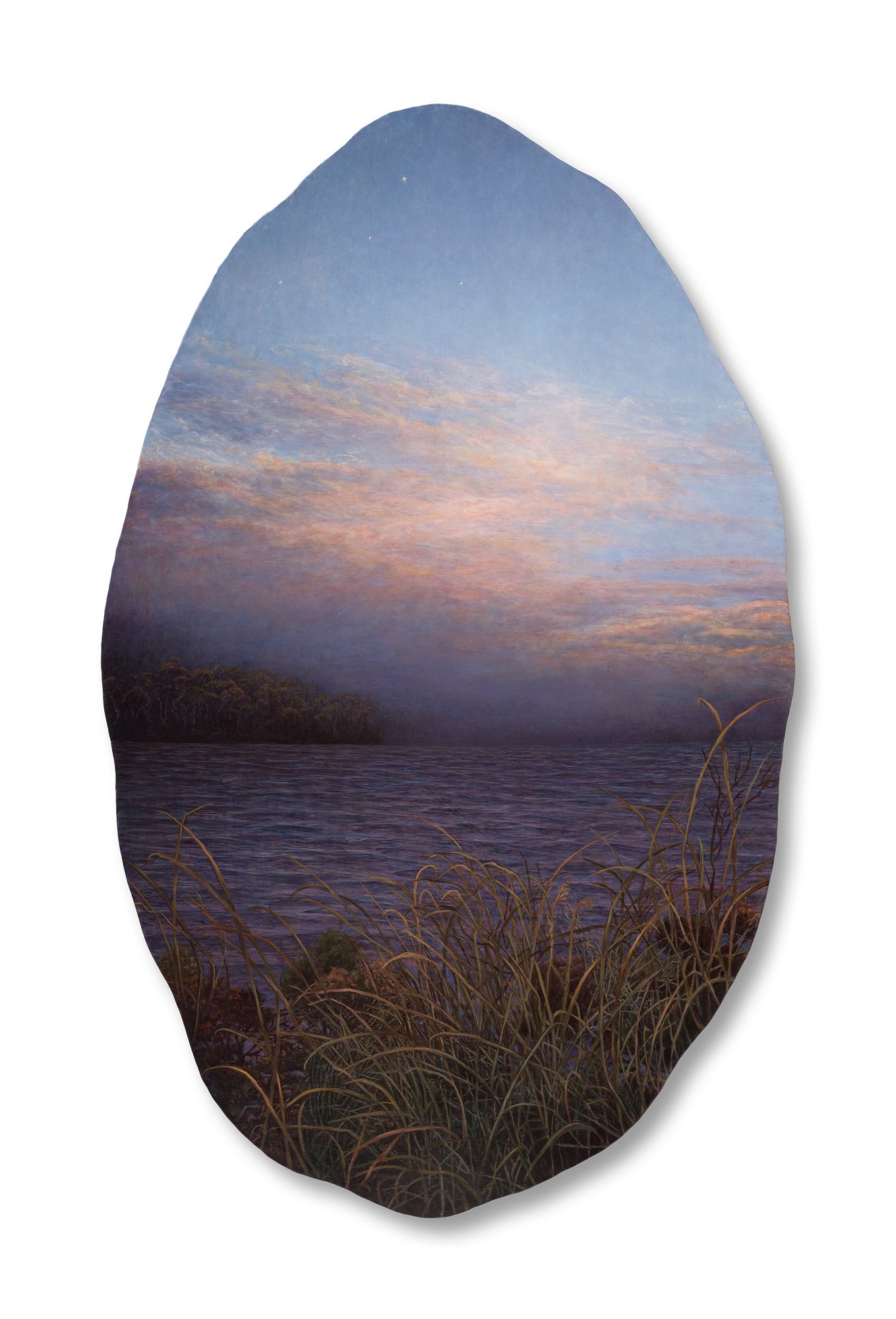
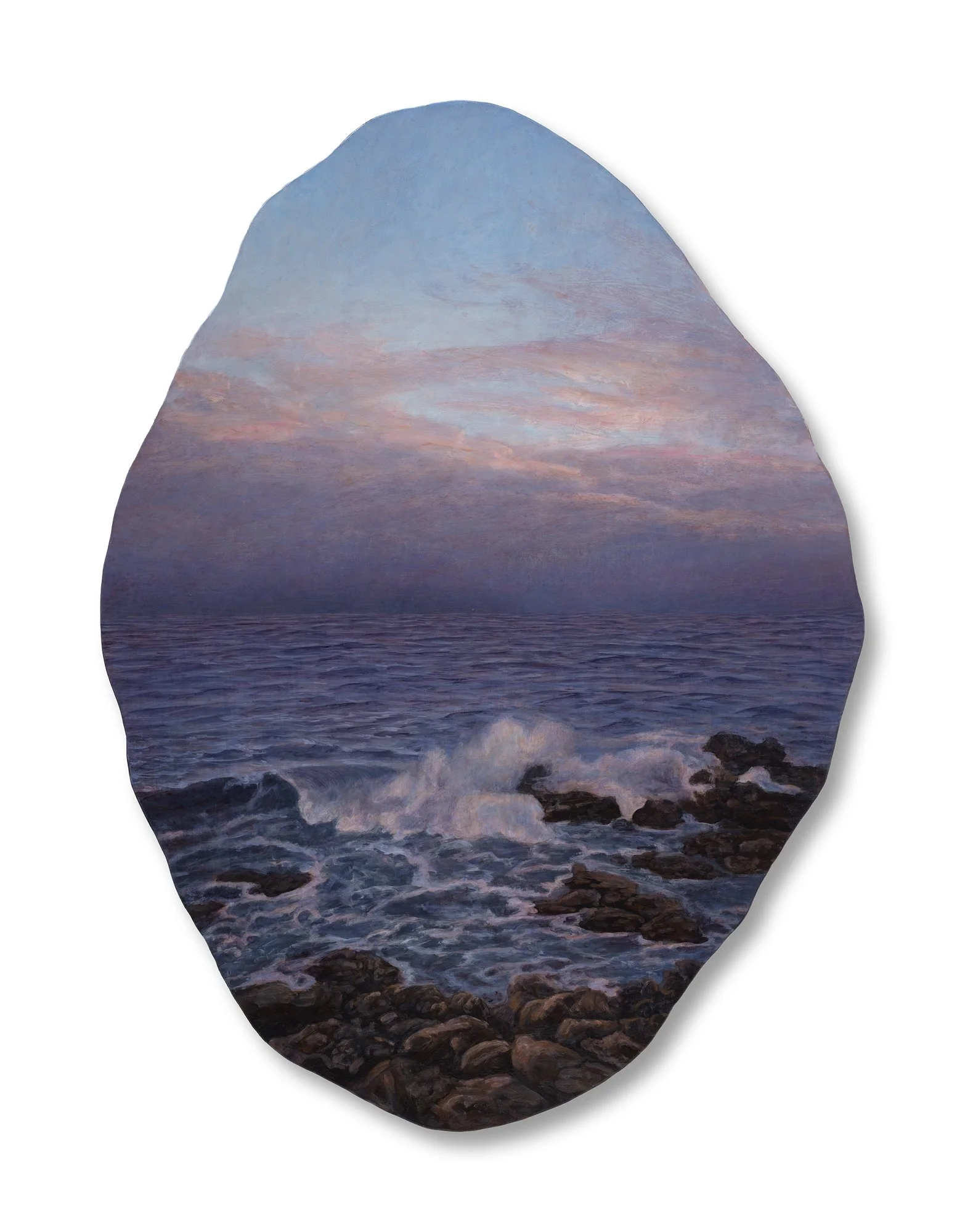
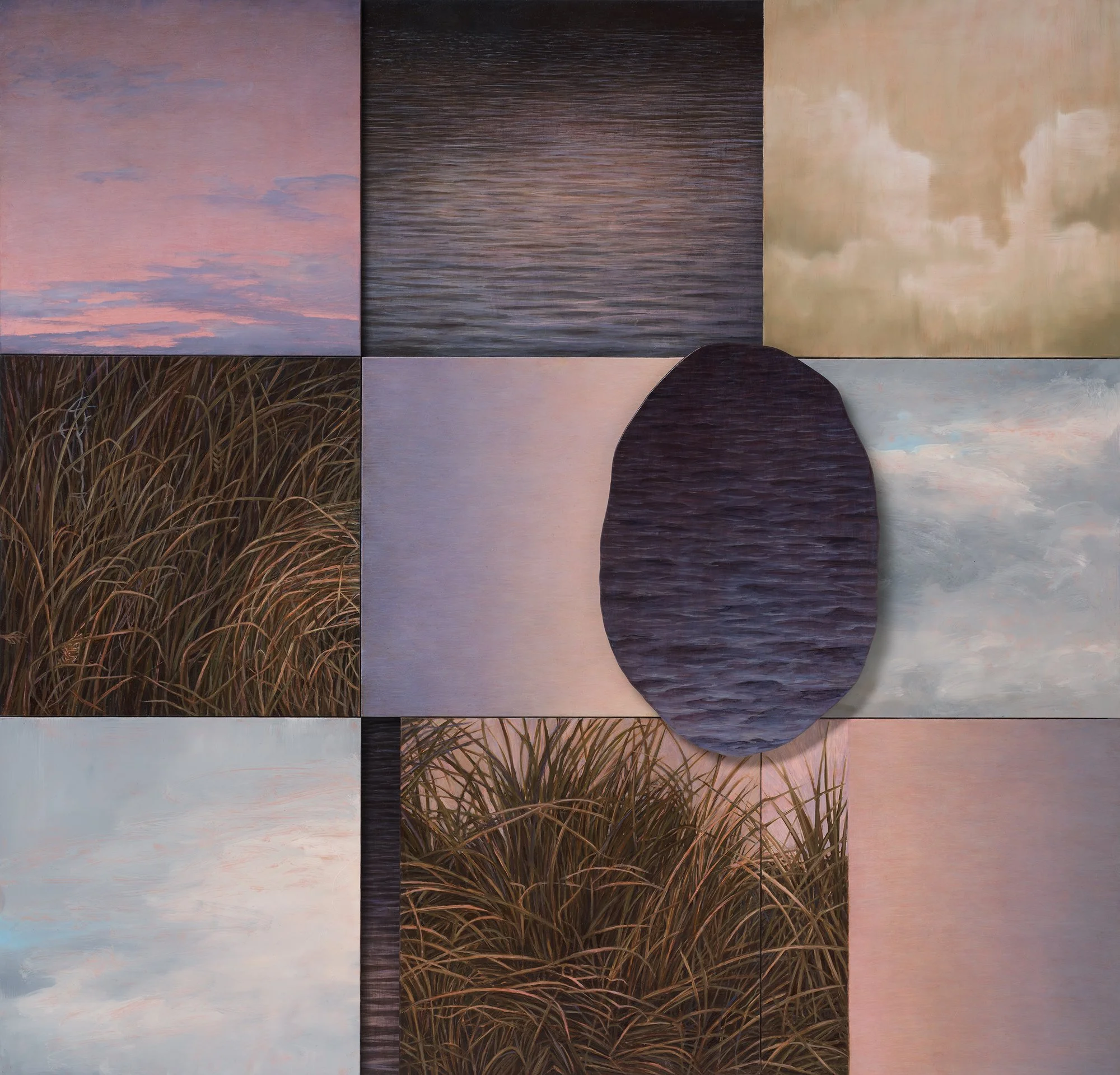
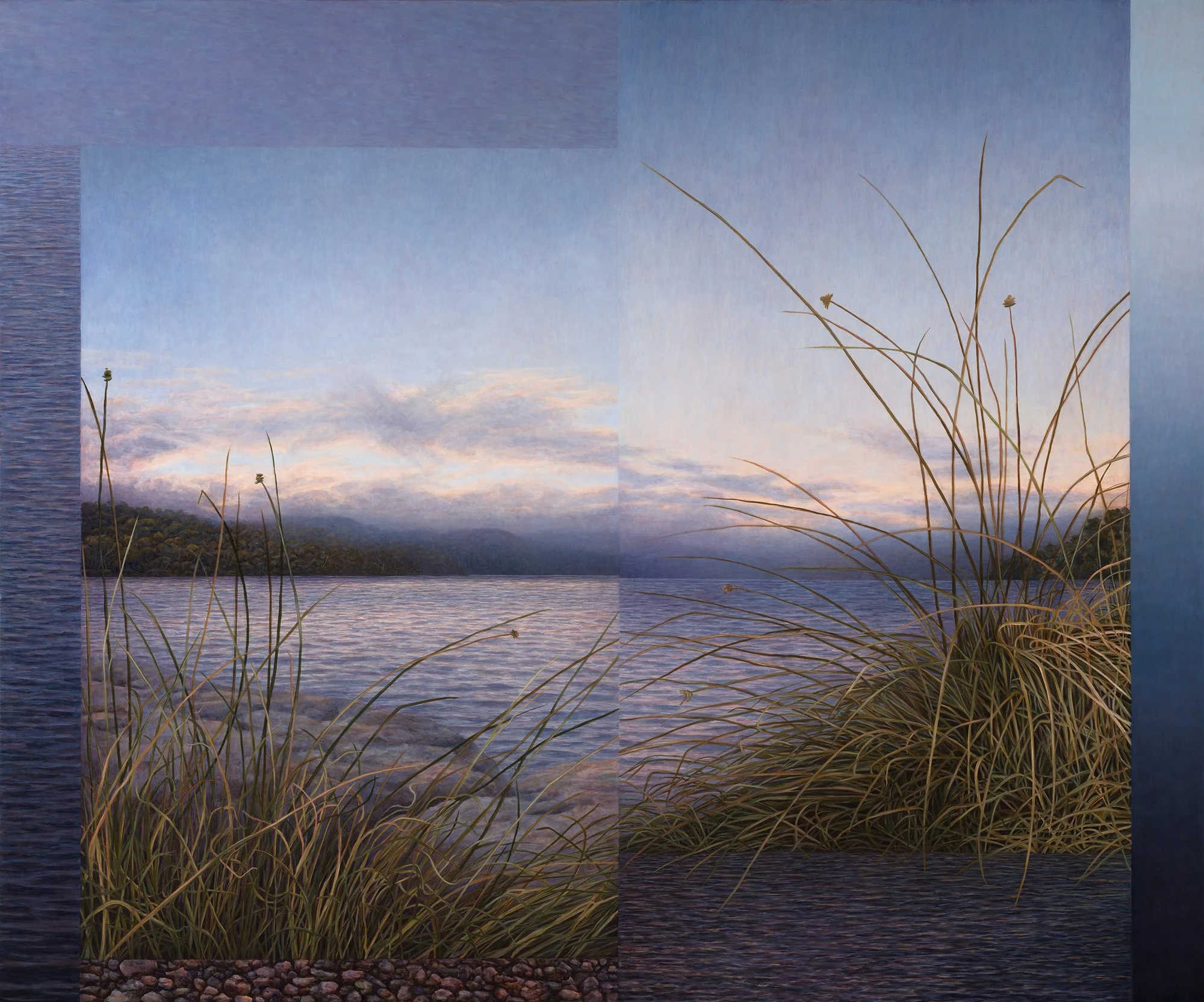
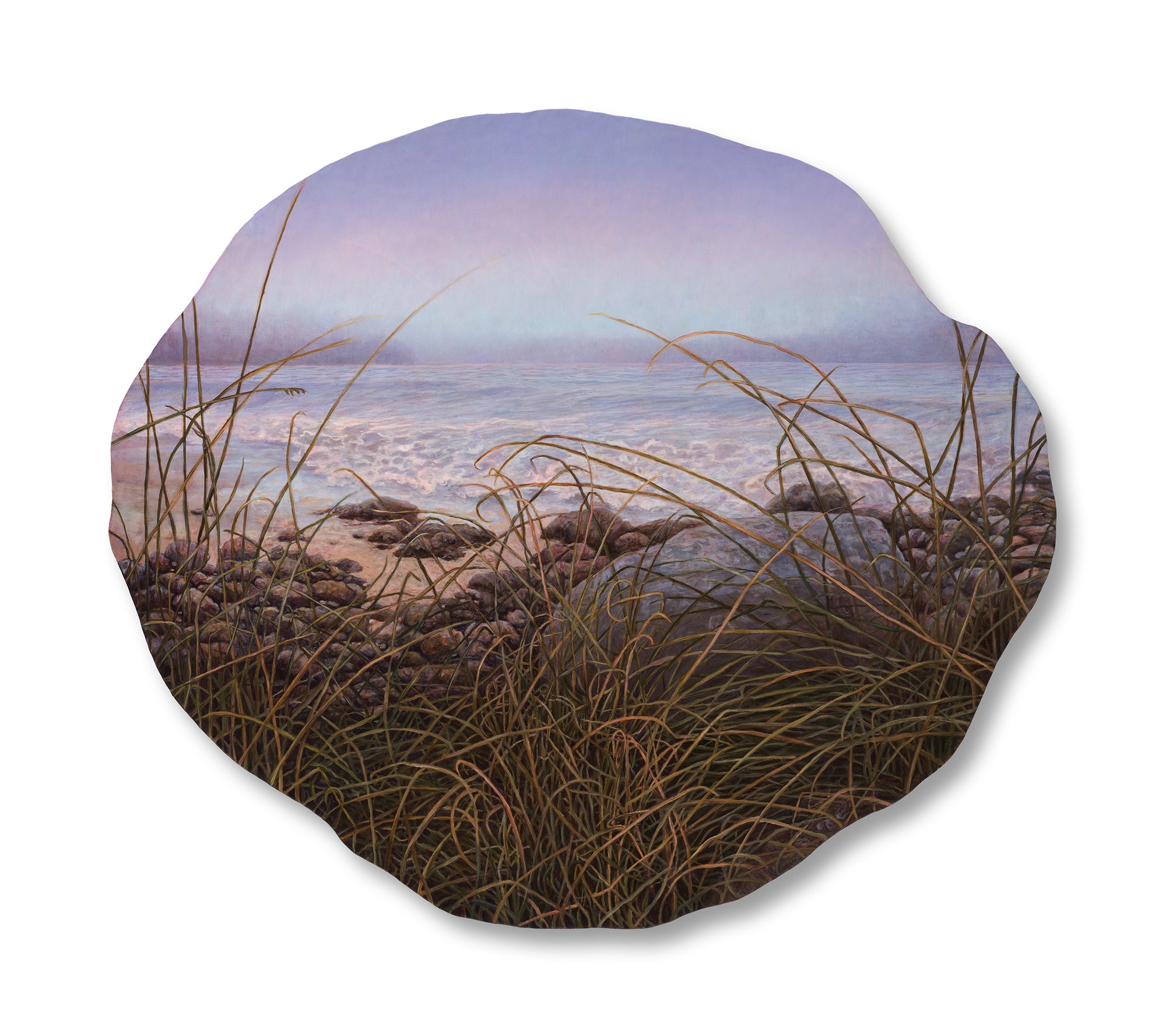
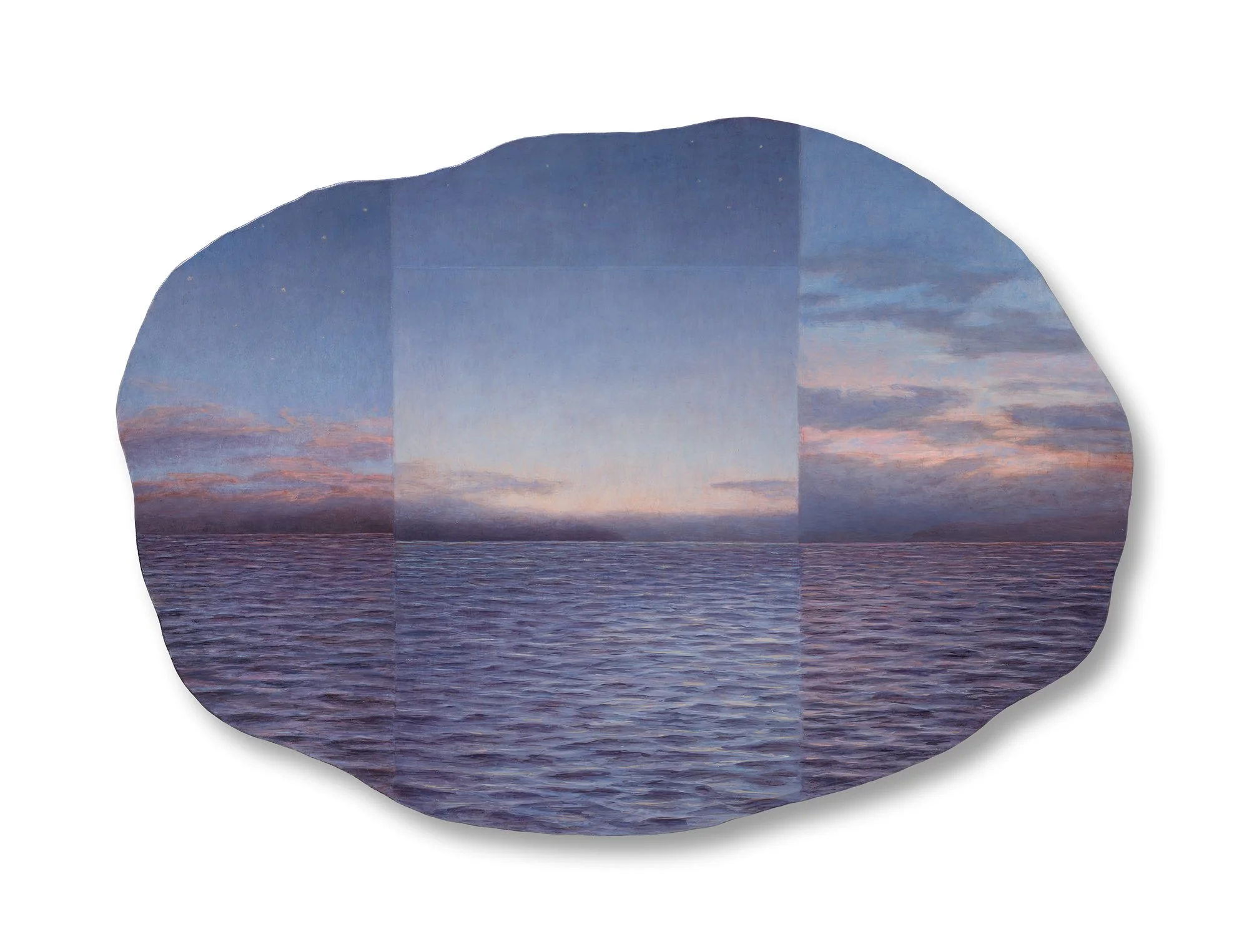
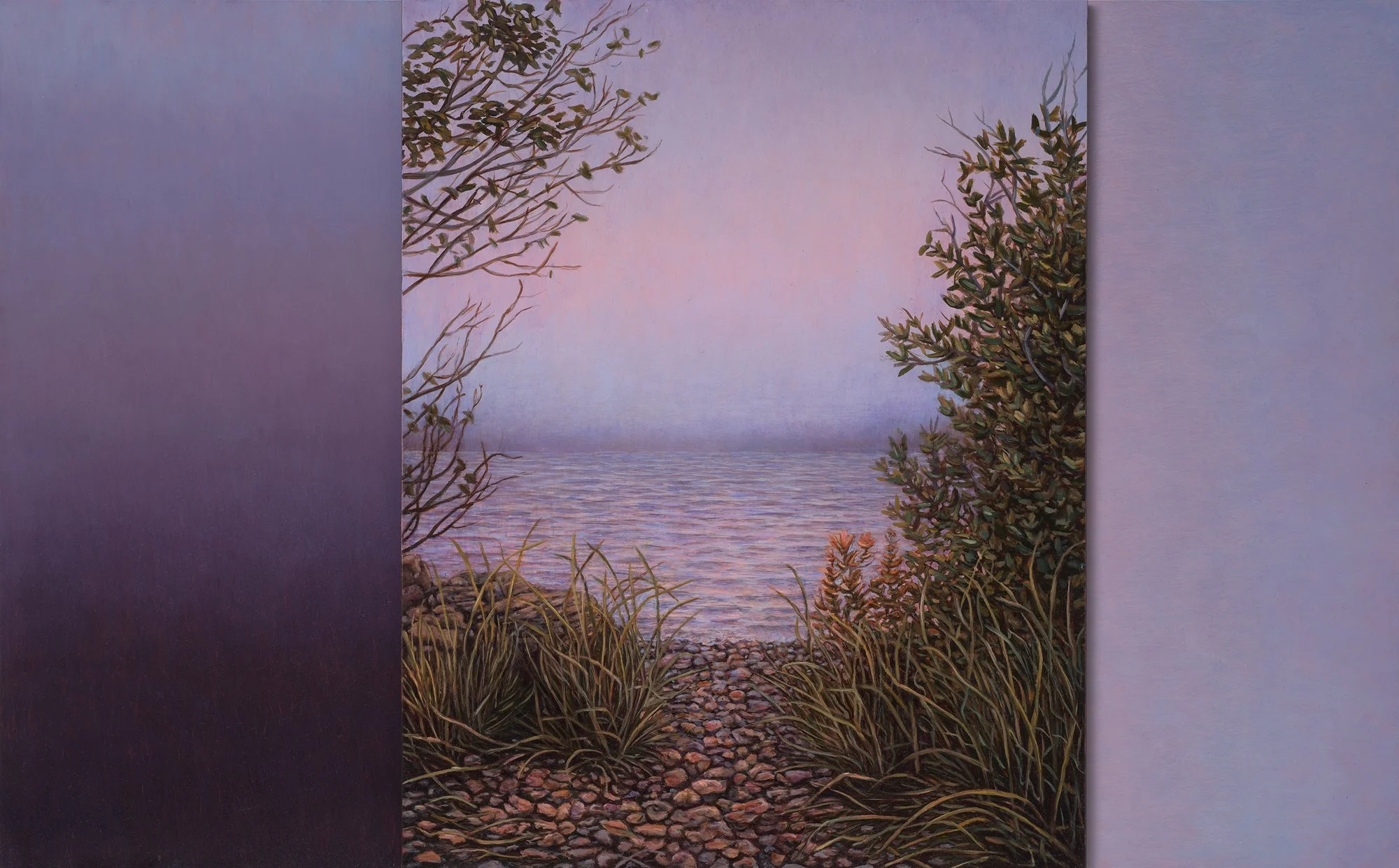
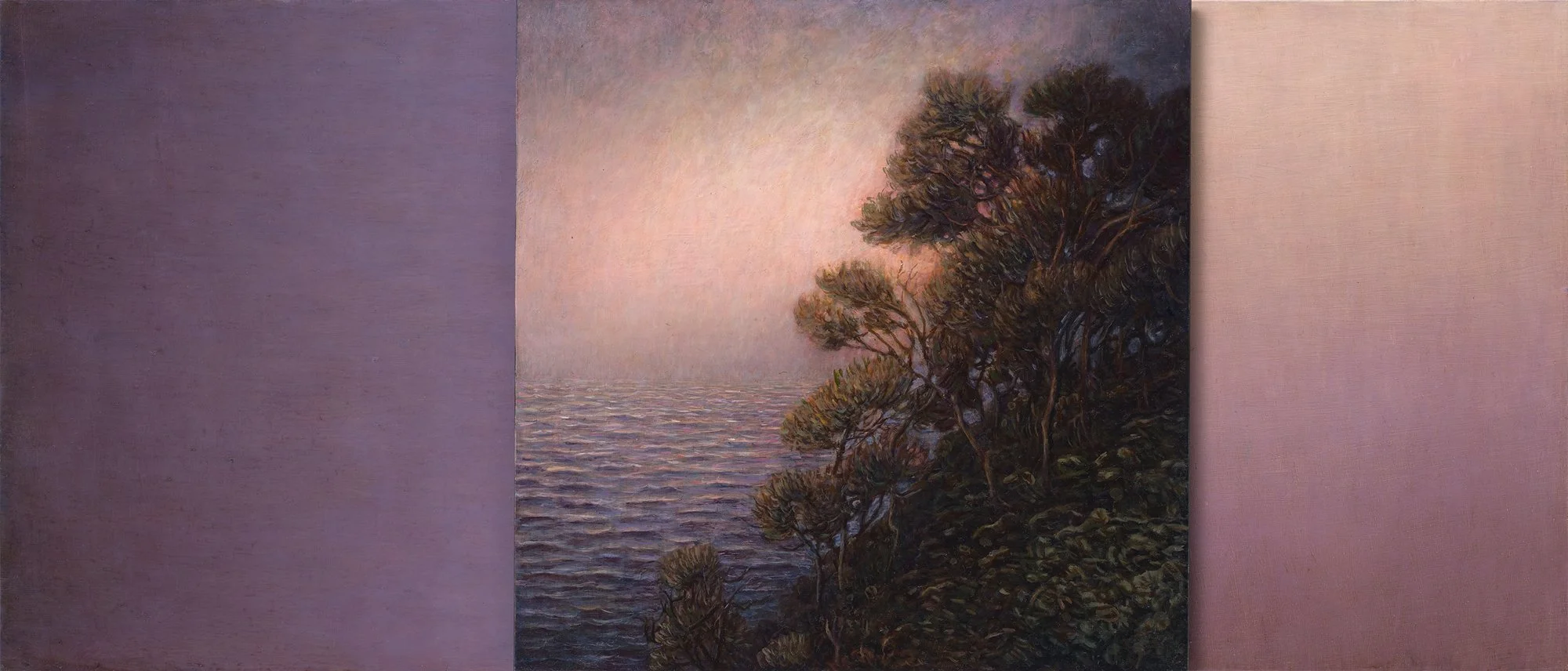
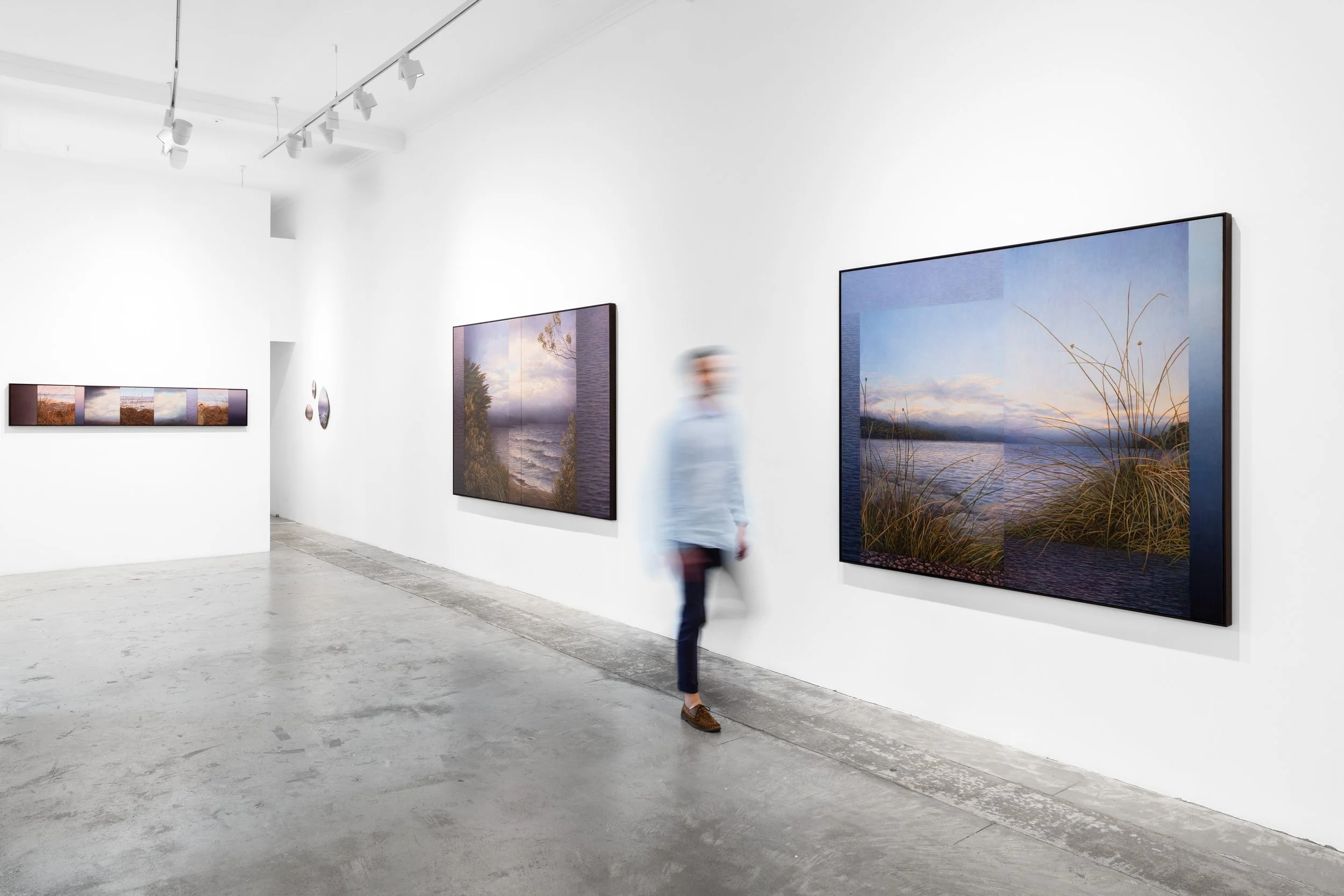
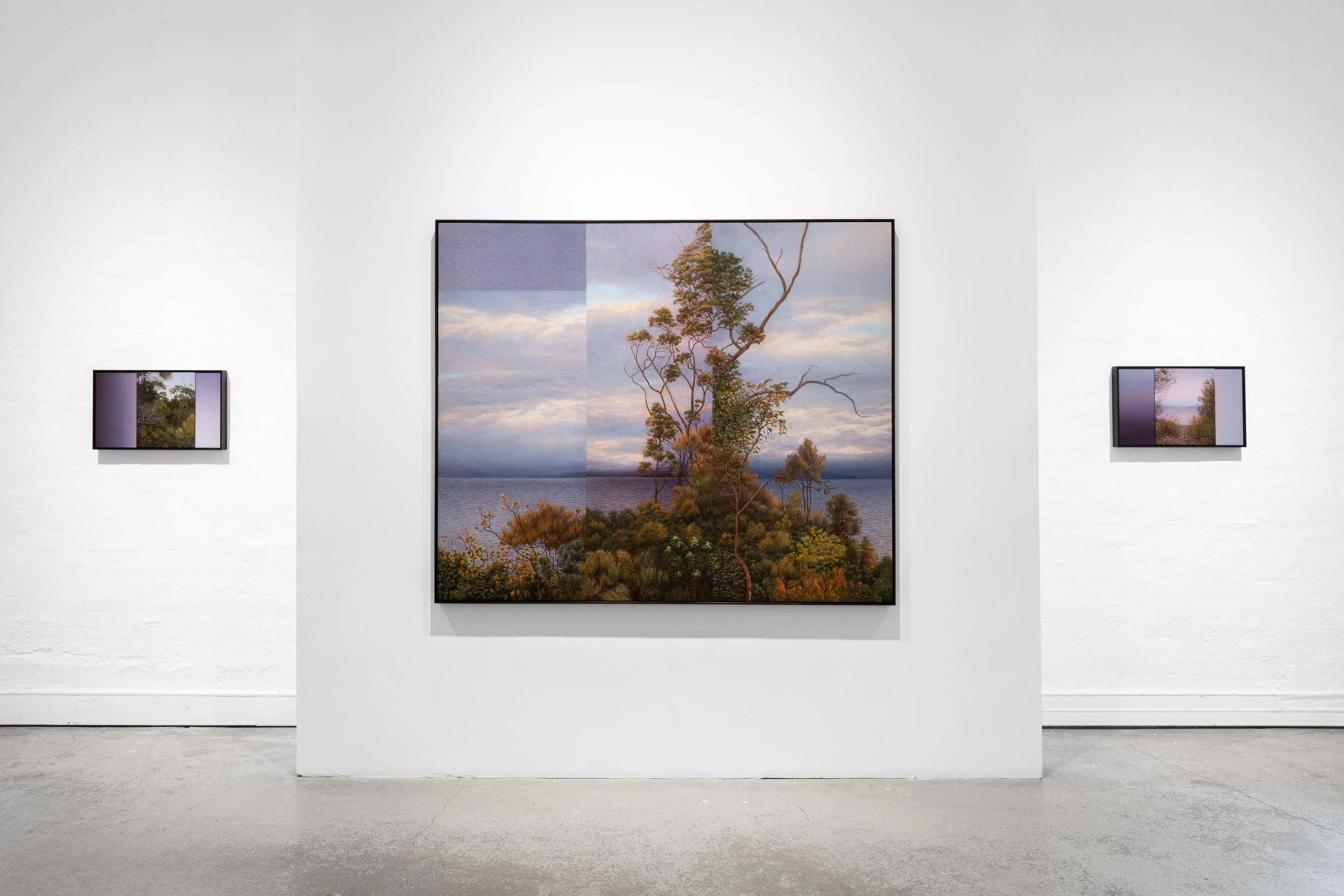
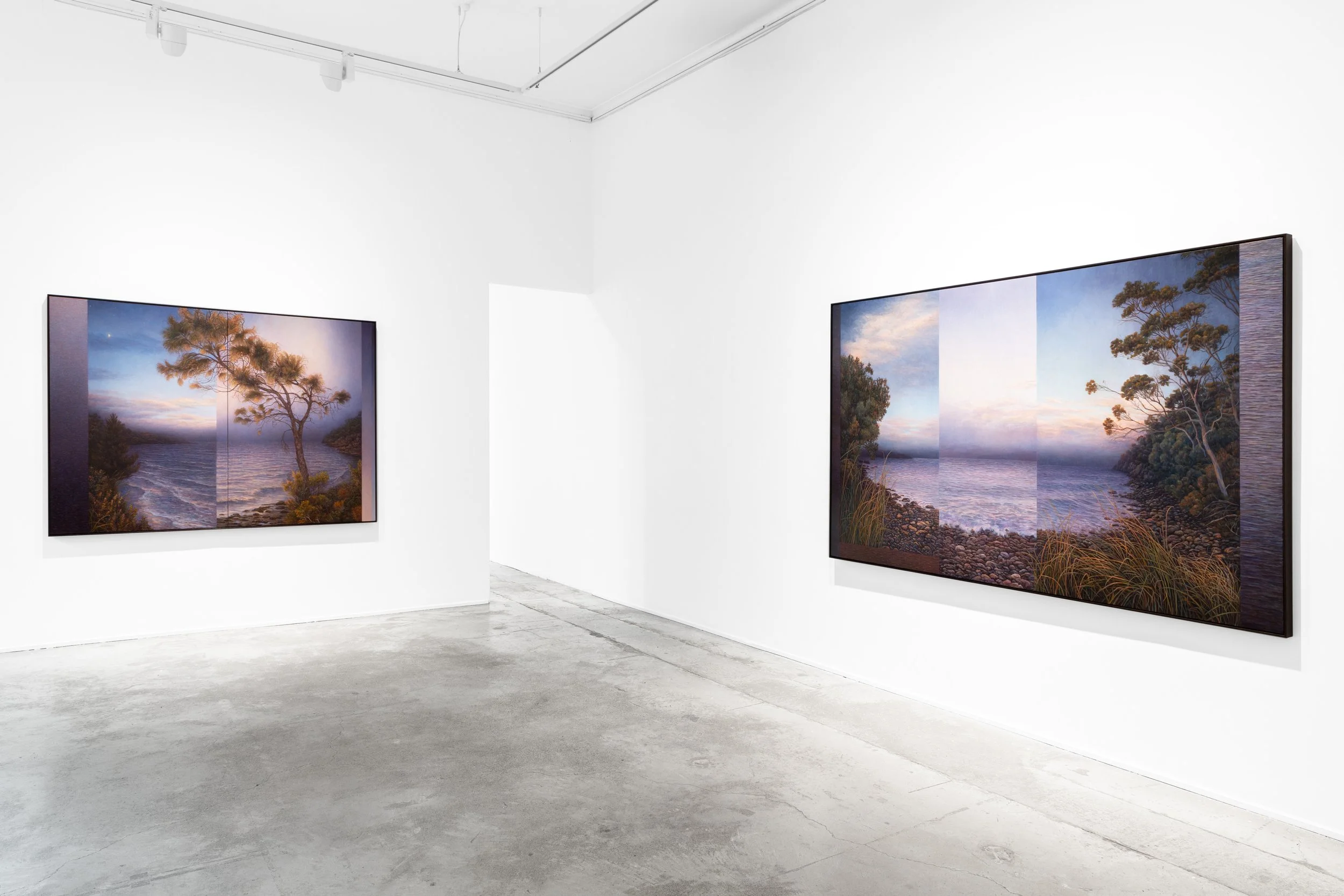
Layers of Place Oil on linen 156cm x 186cm


Exhibition text
Here and Elsewhere
By Andrew Harper
Navigation is an essential aspect of any long sea voyage. Finding the way to new territory requires substantial skill as a navigator: you must be able to make maps; keep records, be sensitive to the quirks and dangers of the voyage into new waters.
There will be challenges.
Here be dragons.
At high school, a teacher of Michaye Boulter saw an early painting by her. It was no more than an image of a dog, sat by a fence, but the teacher knew. This student had something.
Boulter had set out. She came to her central subject matter: Boulter was drawn to the fierce, secret cold of the Southern Ocean. After all, she is the daughter of seafarers. Her parents built a boat that they sailed to Canada; returning years later to Tasmania, where Boulter’s father made a living as a fisherman.
Boulter knows the sea. She lived there, and always returns to it. What else would she seek to paint, to look deeply into, to endlessly envision?
What else would she navigate?
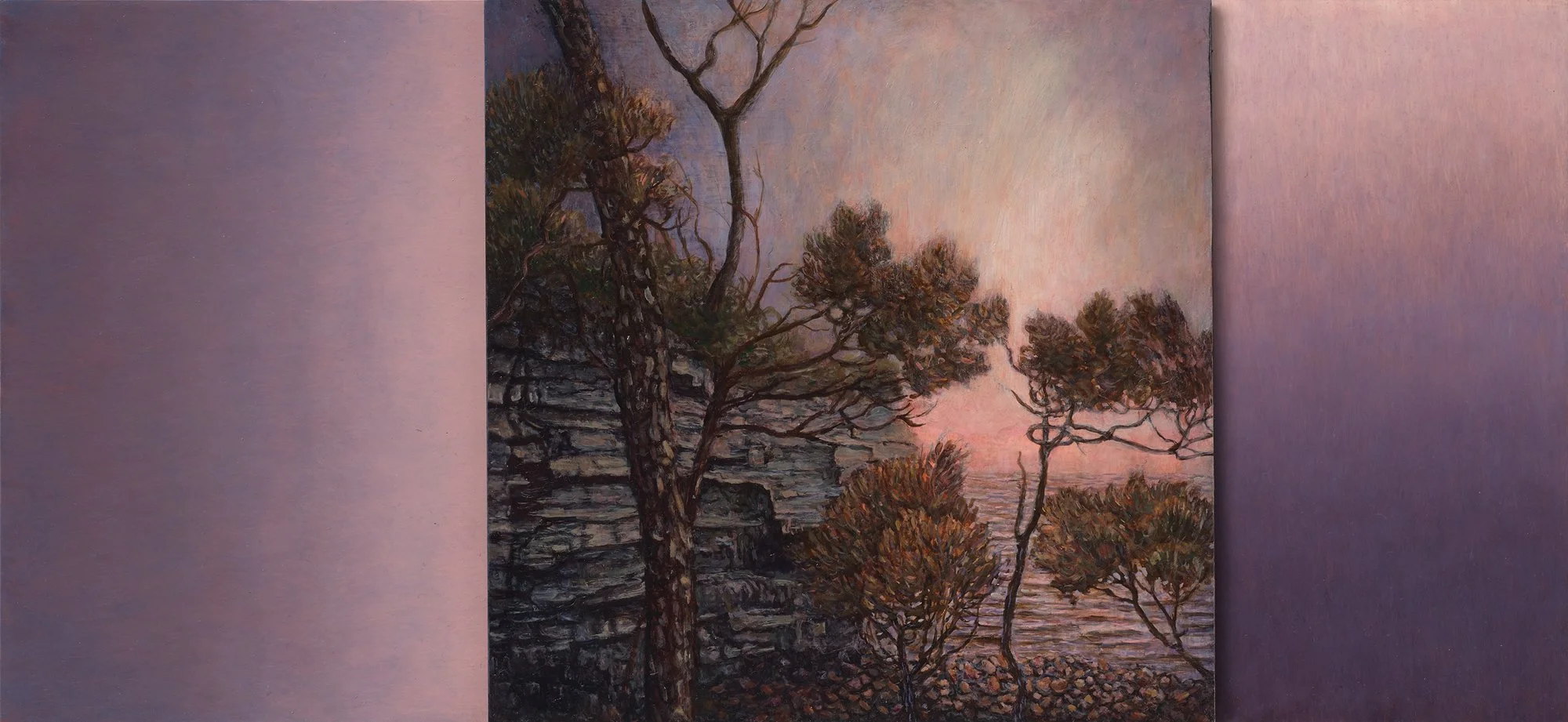
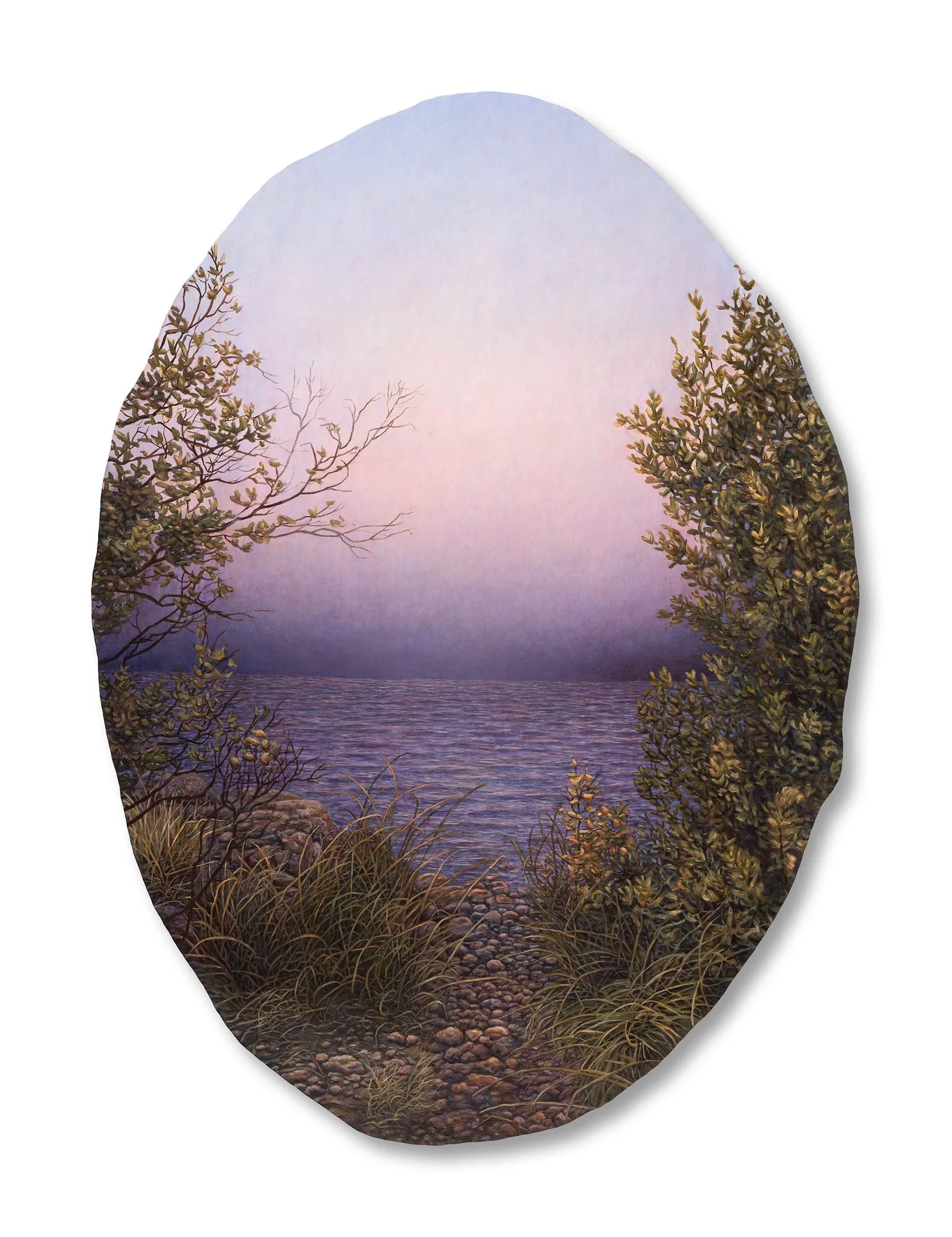
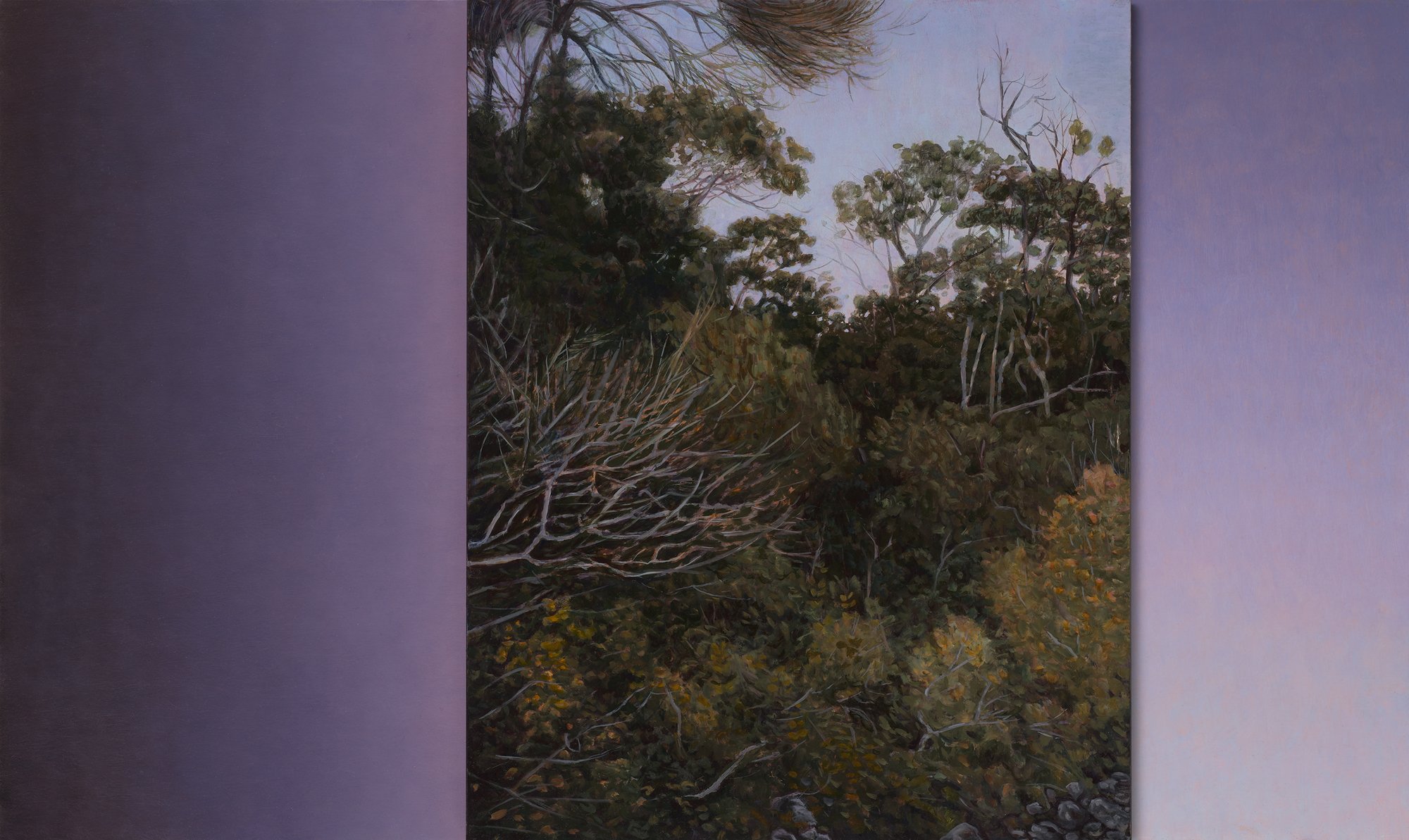
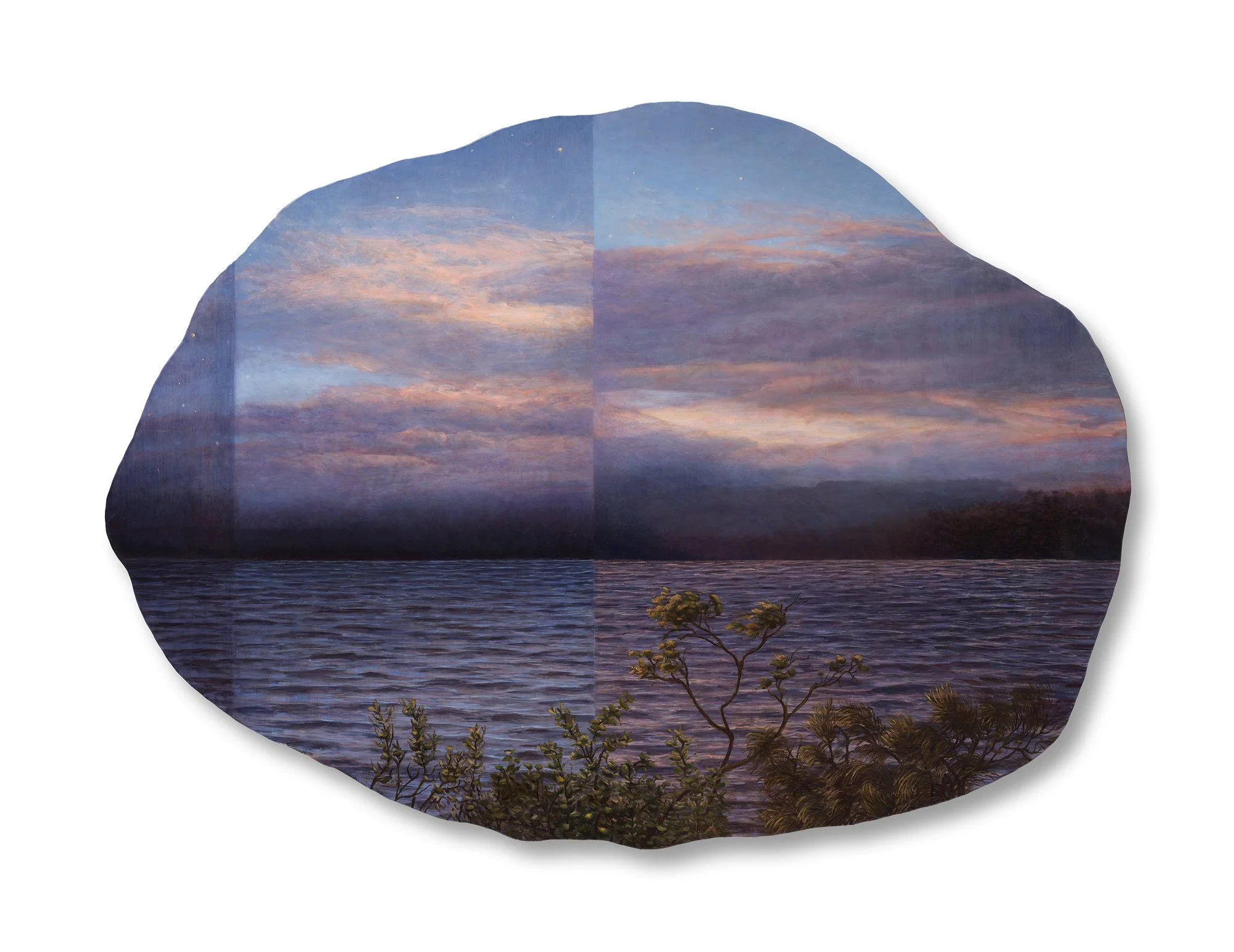
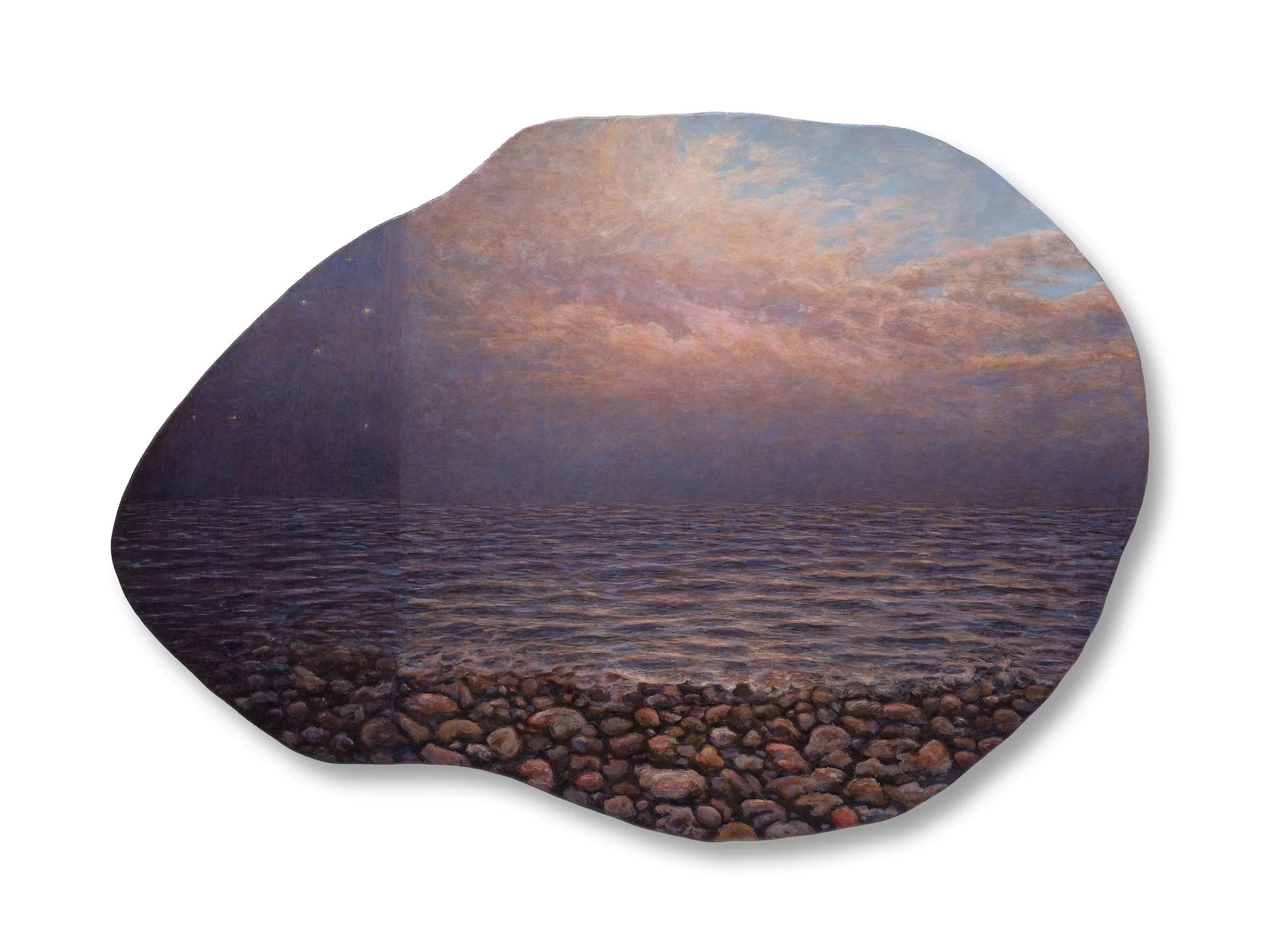
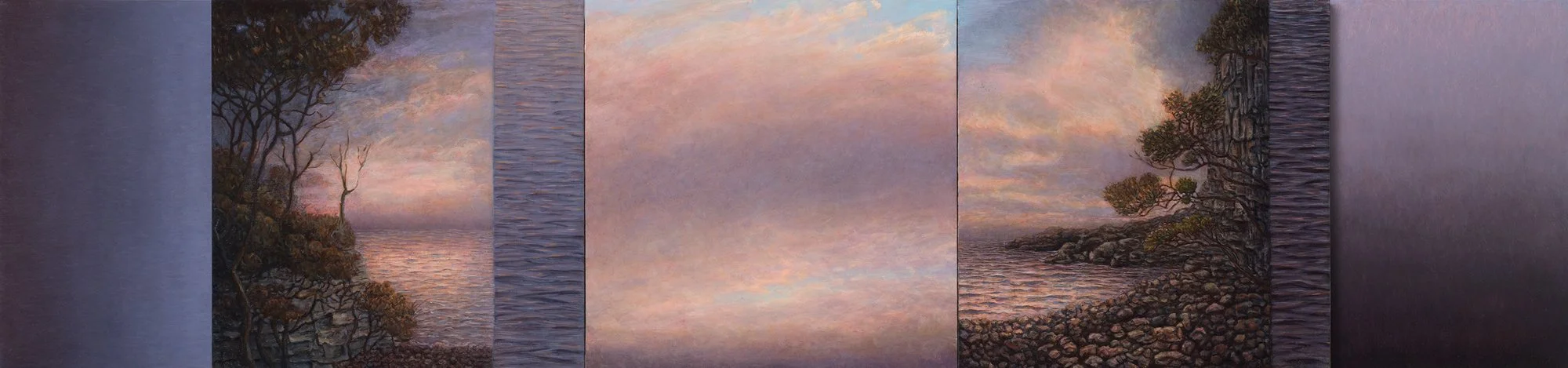
Boulter’s art fully emerged in 2012 with images of the Southern Ocean around Macquarie Island. This gave Boulter a view of the immeasurable: her work captured not only the vastness, but the exhilaration of witnessing it. From there, her explorations and investigations took her to the isolated, primeval spaces of the South and South West coast of Tasmania, where old forests and sharp buttongrass meet the slate-blue waters of the ocean. Boulter’s attraction to these secret regions has become a core concern of her work: those mumbling bruised tones of clouds edged with pale gold sunsets float above forests so deeply emerald they descend into black, silent beside unending flows of mist-swathed sea.
This could have been enough: Boulter paints the moods of these spaces with much sensitivity.Boulter needed to reach further into the quiet and eerie spaces. She looked further, to a more complex navigation.
She started to cut.
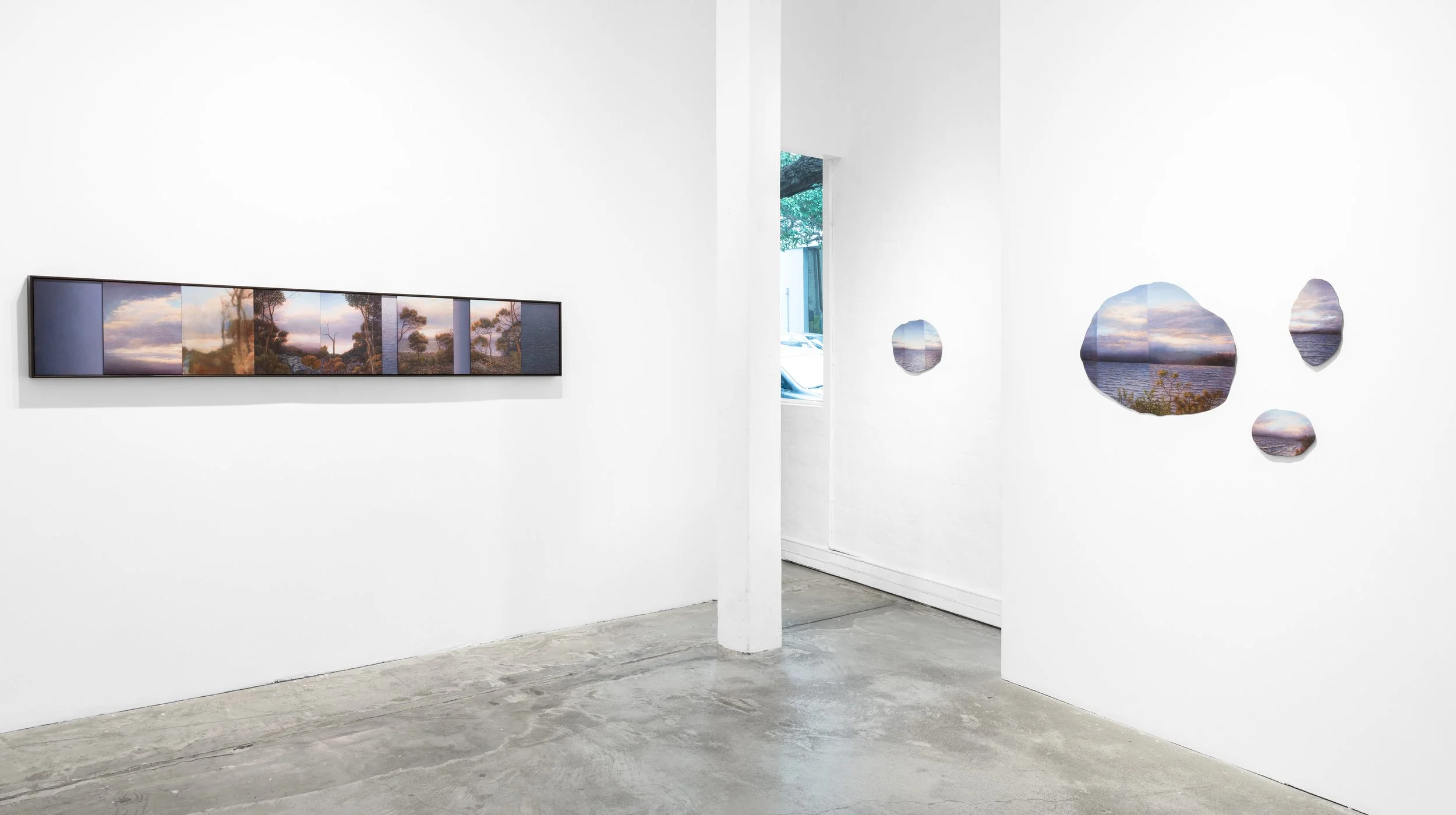
Her reference photography and her drawings, printed and copied, were re-shaped with scissors, becoming a method of divination. Boulter matched and layered images over, merging different spaces and moments. This technique had been quietly present in her work, but in 2024, Boulter dove in. She began creating radical new works, constructed of her own images, works that looked at the same place at different moments, summoning new illuminations from frozen shards of time. Here was not only the huge shifting scape of the ocean, but a vision of cascading, interwoven time: Boulter’s own memories and the profound realisation that the spaces of the coast and oceans are active, outside of anyone witnessing them. Boulter places these images together, builds layers and disrupts one image by making it many.
Her work now reflects the unending passage of time and the deep geological dance of water and land: another space so vast even the sea is dwarfed by it.
Boulter’s project travels past its own limitations, bright and strange, daring to reach for a quiet transcendence, beyond the edge of all maps.
-
Here and Elsewhere
By Andrew Harper
Navigation is an essential aspect of any long sea voyage. Finding the way to new territory requires substantial skill as a navigator: you must be able to make maps; keep records, be sensitive to the quirks and dangers of the voyage into new waters.
There will be challenges.
Here be dragons.At high school, a teacher of Michaye Boulter saw an early painting by her. It was no more than an image of a dog, sat by a fence, but the teacher knew. This student had something.
Boulter had set out. She came to her central subject matter: Boulter was drawn to the fierce, secret cold of the Southern Ocean. After all, she is the daughter of seafarers. Her parents built a boat that they sailed to Canada; returning years later to Tasmania, where Boulter’s father made a living as a fisherman.
Boulter knows the sea. She lived there, and always returns to it. What else would she seek to paint, to look deeply into, to endlessly envision?
What else would she navigate?
Boulter’s art fully emerged in 2012 with images of the Southern Ocean around Macquarie Island. This gave Boulter a view of the immeasurable: her work captured not only the vastness, but the exhilaration of witnessing it. From there, her explorations and investigations took her to the isolated, primeval spaces of the South and South West coast of Tasmania, where old forests and sharp buttongrass meet the slate-blue waters of the ocean. Boulter’s attraction to these secret regions has become a core concern of her work: those mumbling bruised tones of clouds edged with pale gold sunsets float above forests so deeply emerald they descend into black, silent beside unending flows of mist-swathed sea.
This could have been enough: Boulter paints the moods of these spaces with much sensitivity.Boulter needed to reach further into the quiet and eerie spaces. She looked further, to a more complex navigation.
She started to cut.Her reference photography and her drawings, printed and copied, were re-shaped with scissors, becoming a method of divination. Boulter matched and layered images over, merging different spaces and moments. This technique had been quietly present in her work, but in 2024, Boulter dove in. She began creating radical new works, constructed of her own images, works that looked at the same place at different moments, summoning new illuminations from frozen shards of time. Here was not only the huge shifting scape of the ocean, but a vision of cascading, interwoven time: Boulter’s own memories and the profound realisation that the spaces of the coast and oceans are active, outside of anyone witnessing them. Boulter places these images together, builds layers and disrupts one image by making it many.
Her work now reflects the unending passage of time and the deep geological dance of water and land: another space so vast even the sea is dwarfed by it.
Boulter’s project travels past its own limitations, bright and strange, daring to reach for a quiet transcendence, beyond the edge of all maps.