Your Custom Text Here
Shelter | 2018
Arthouse Gallery
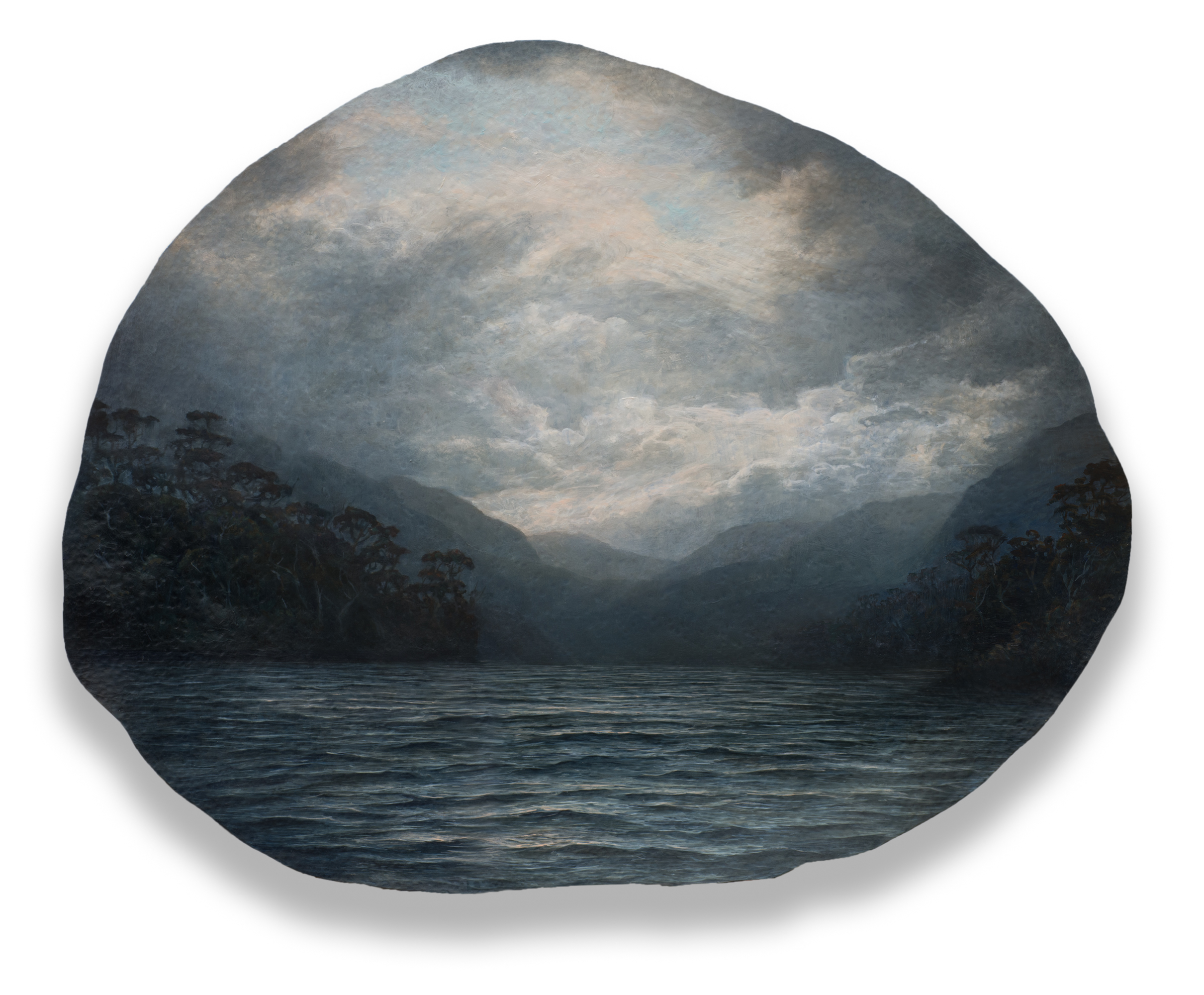
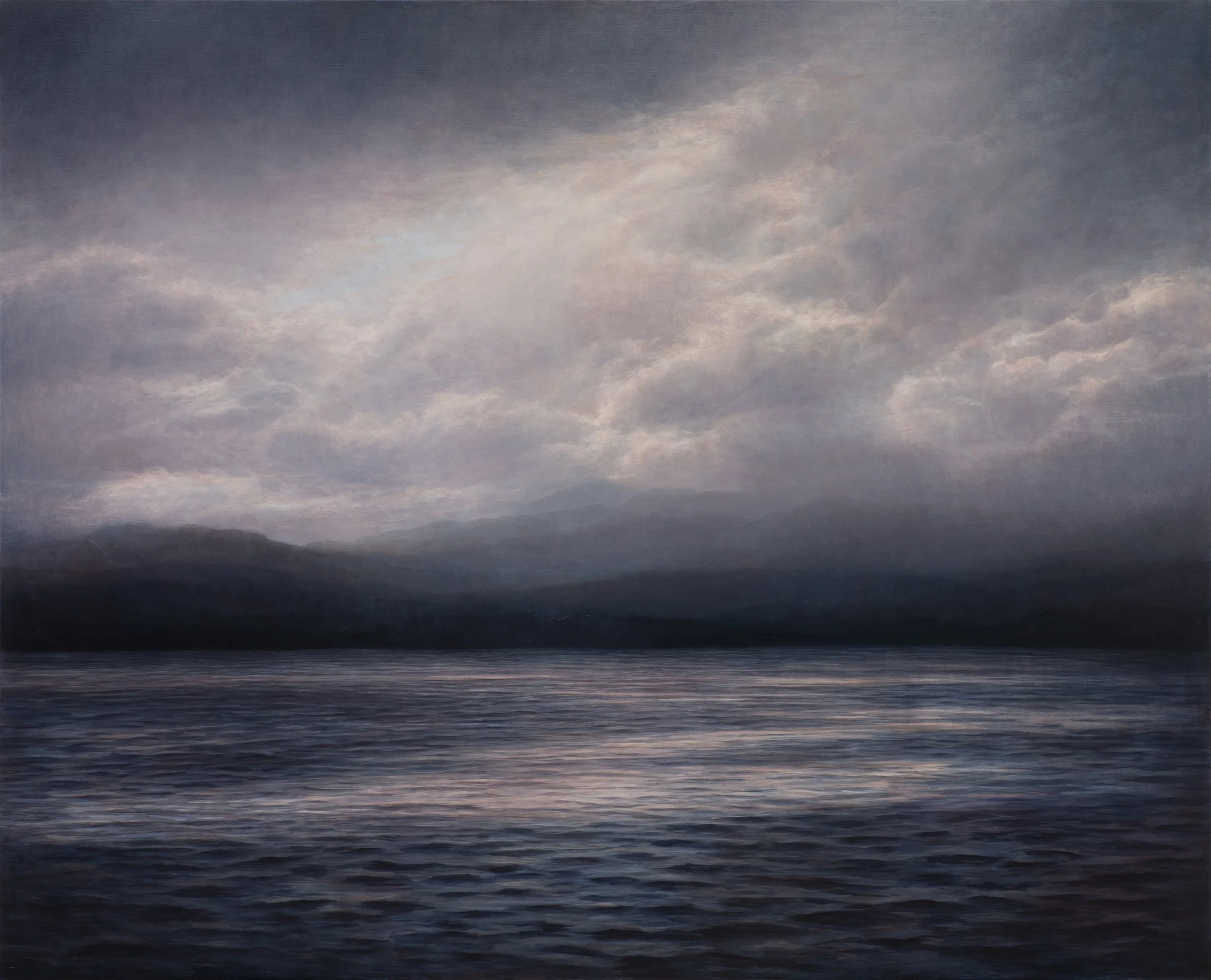

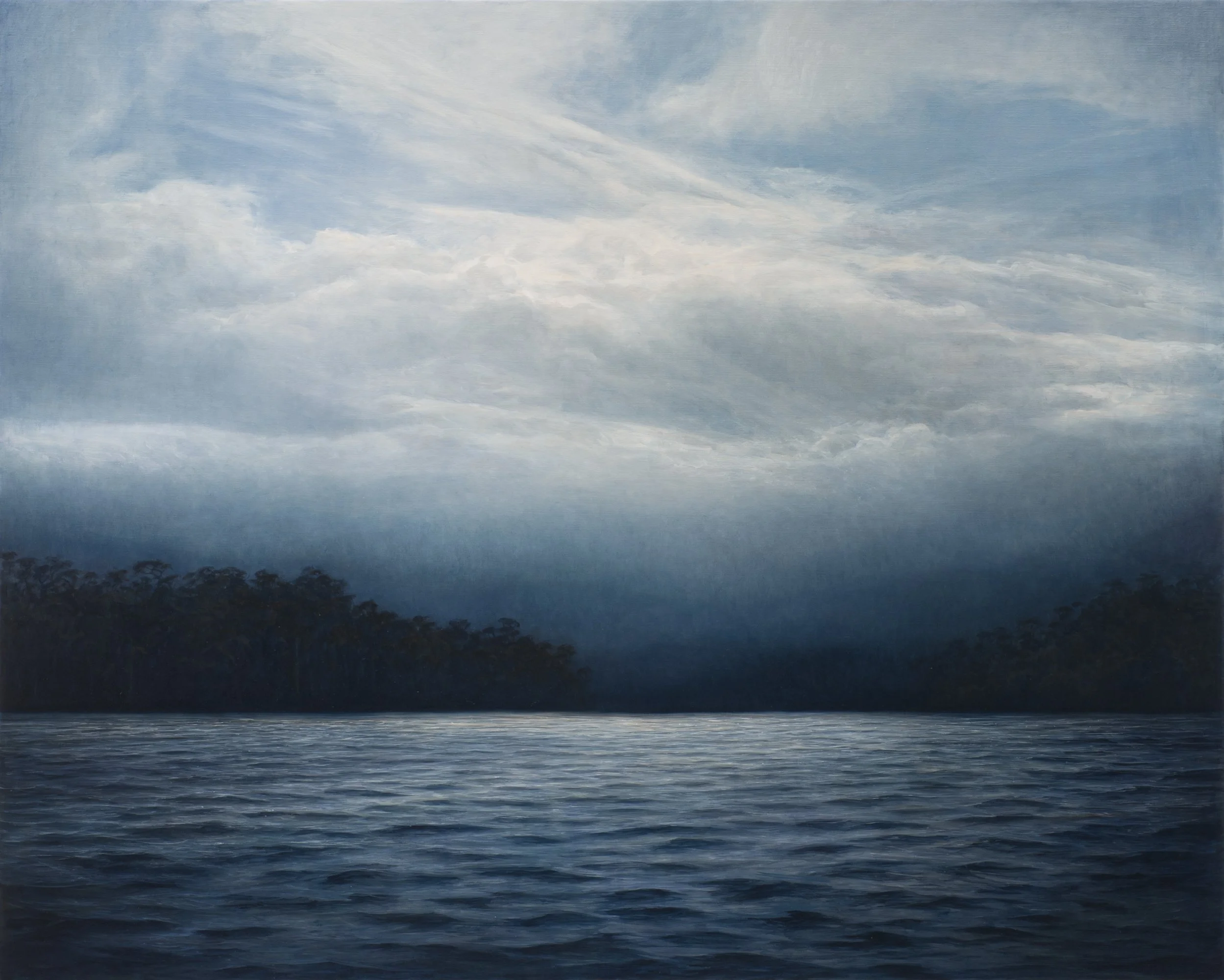
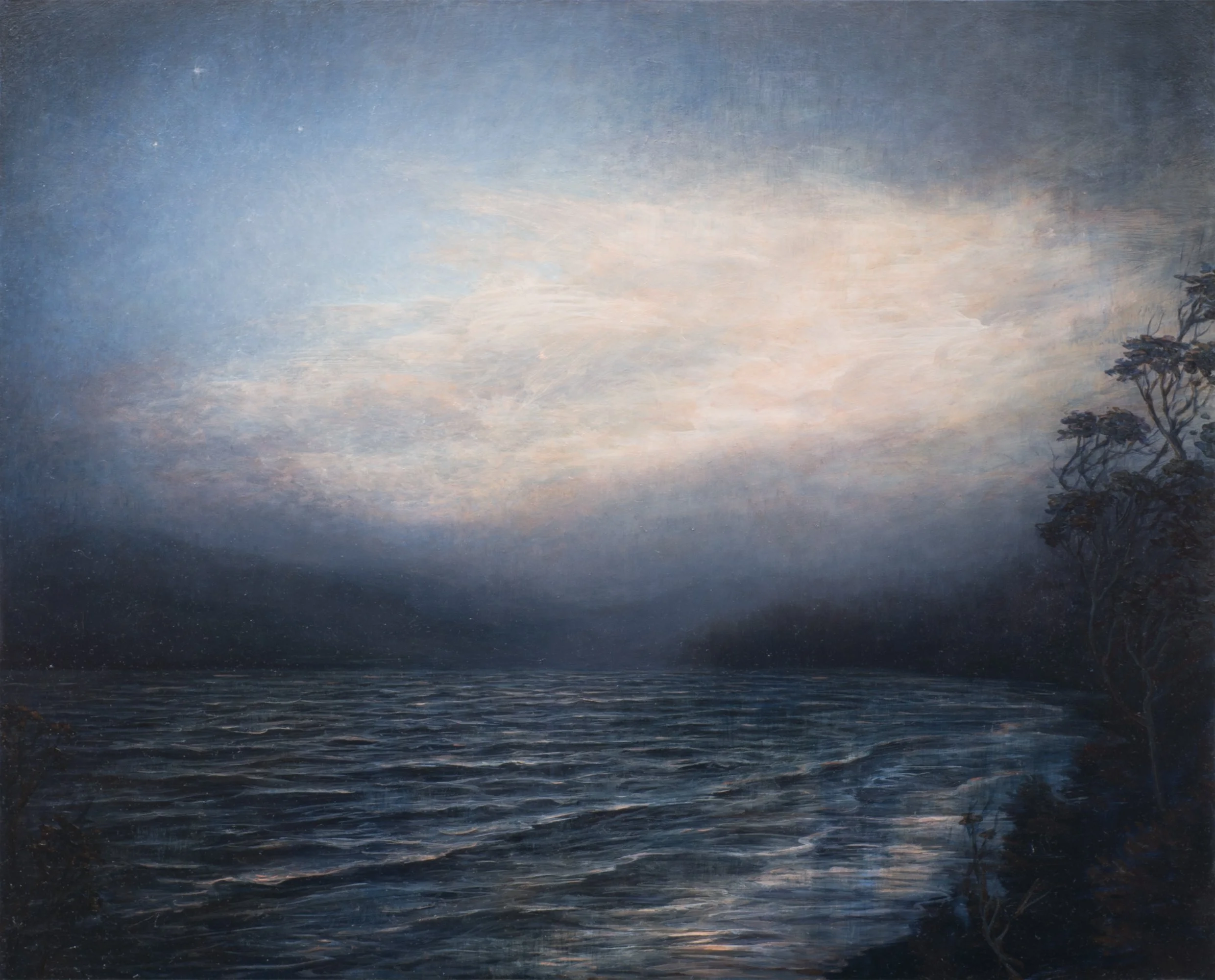
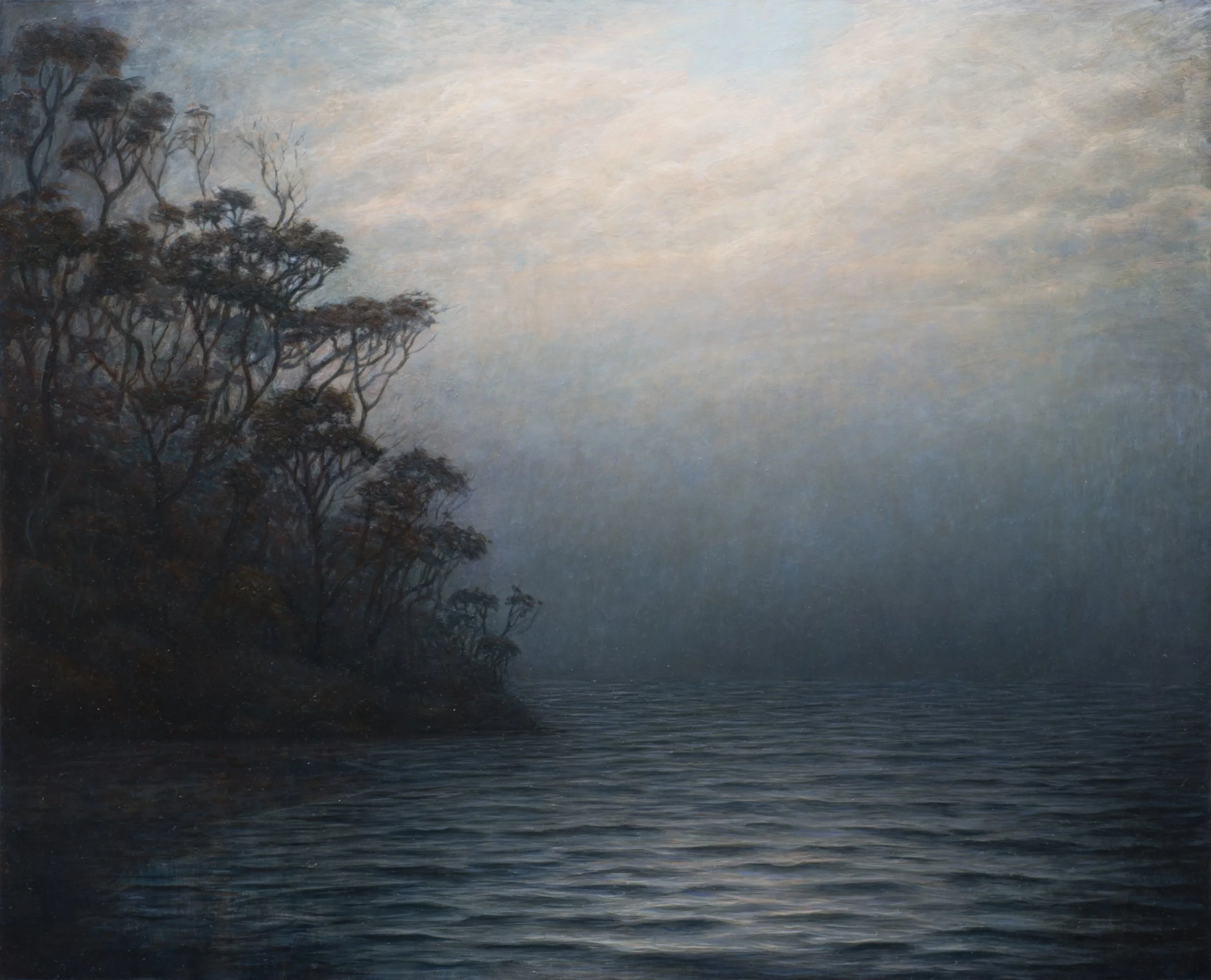
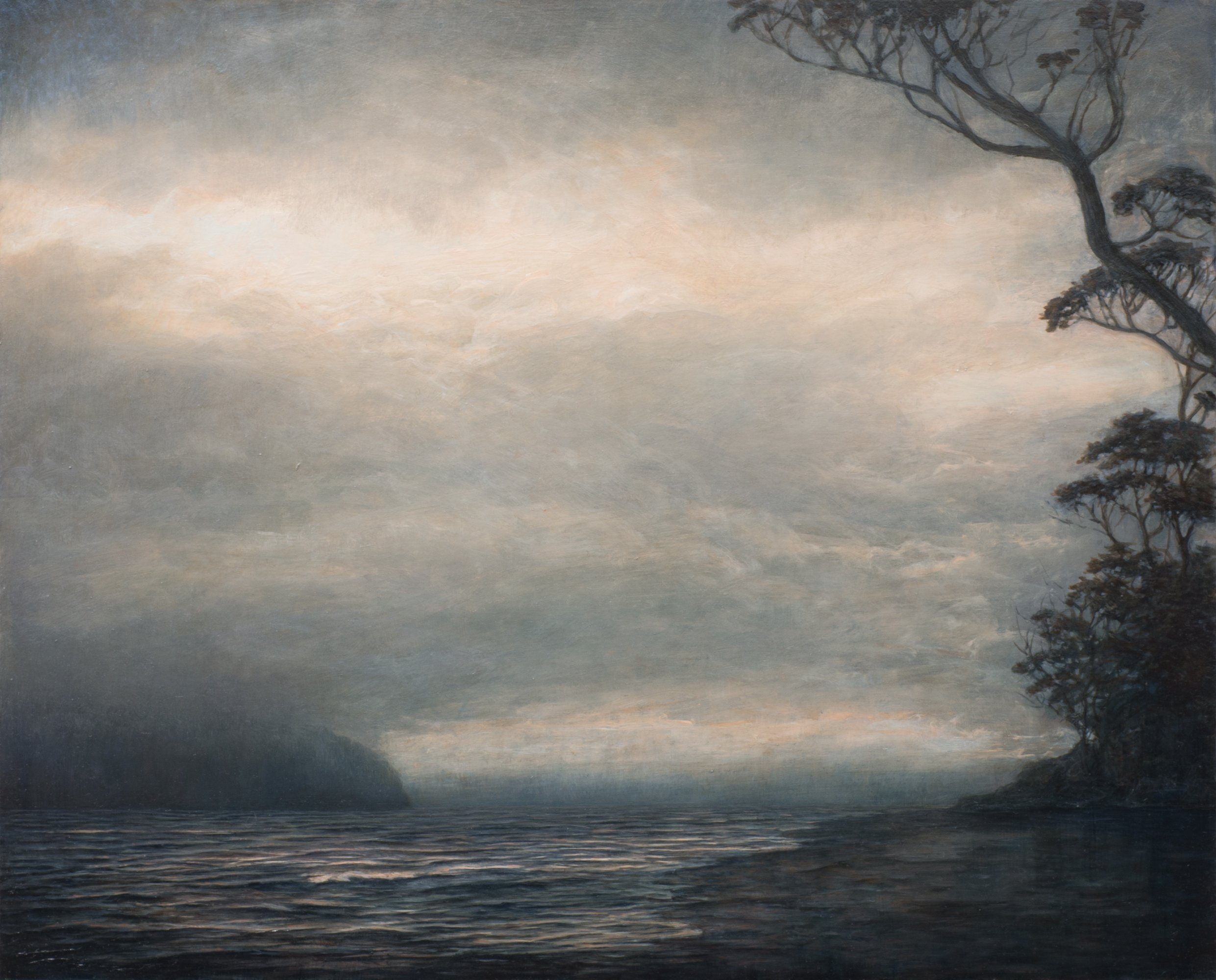
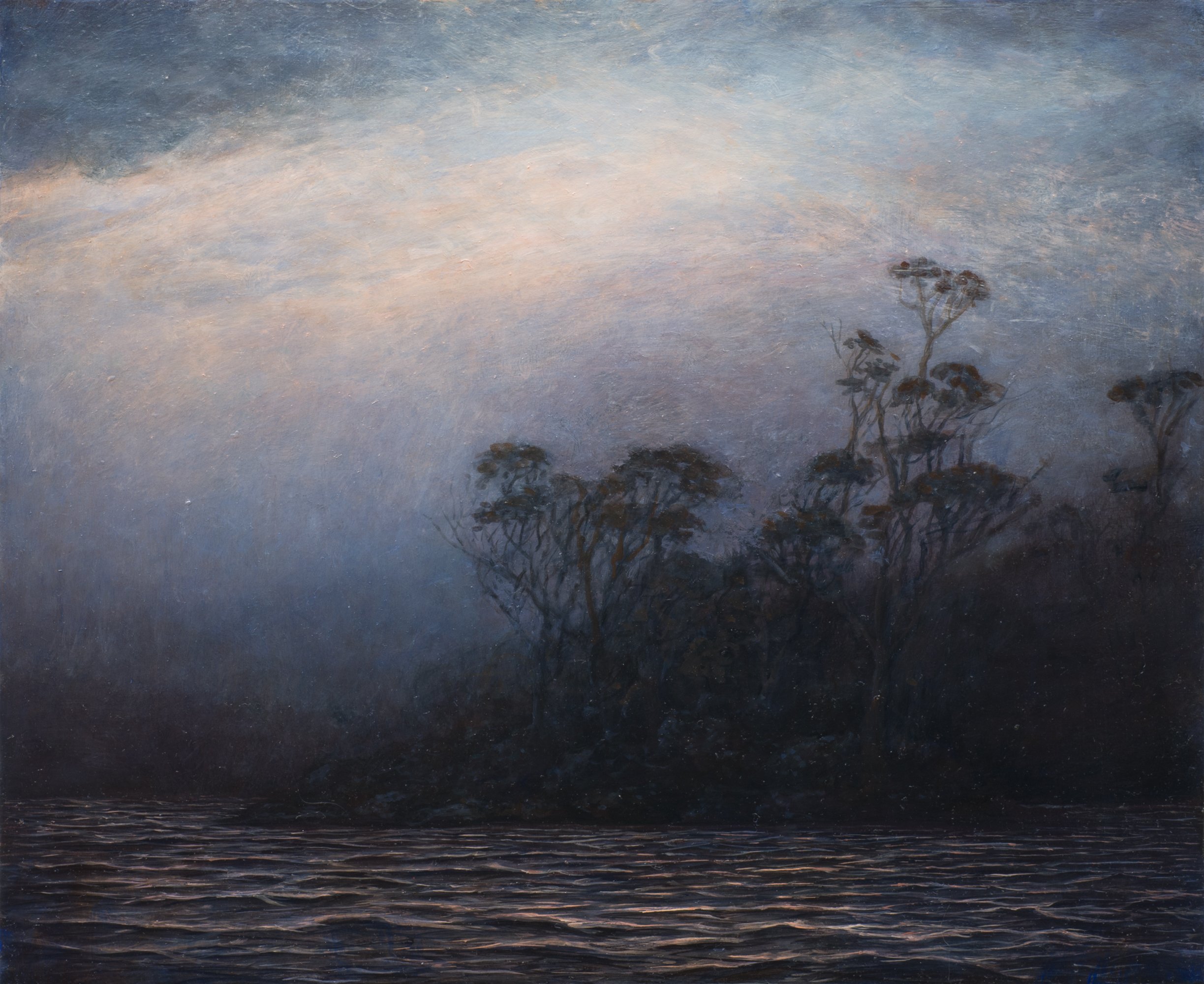
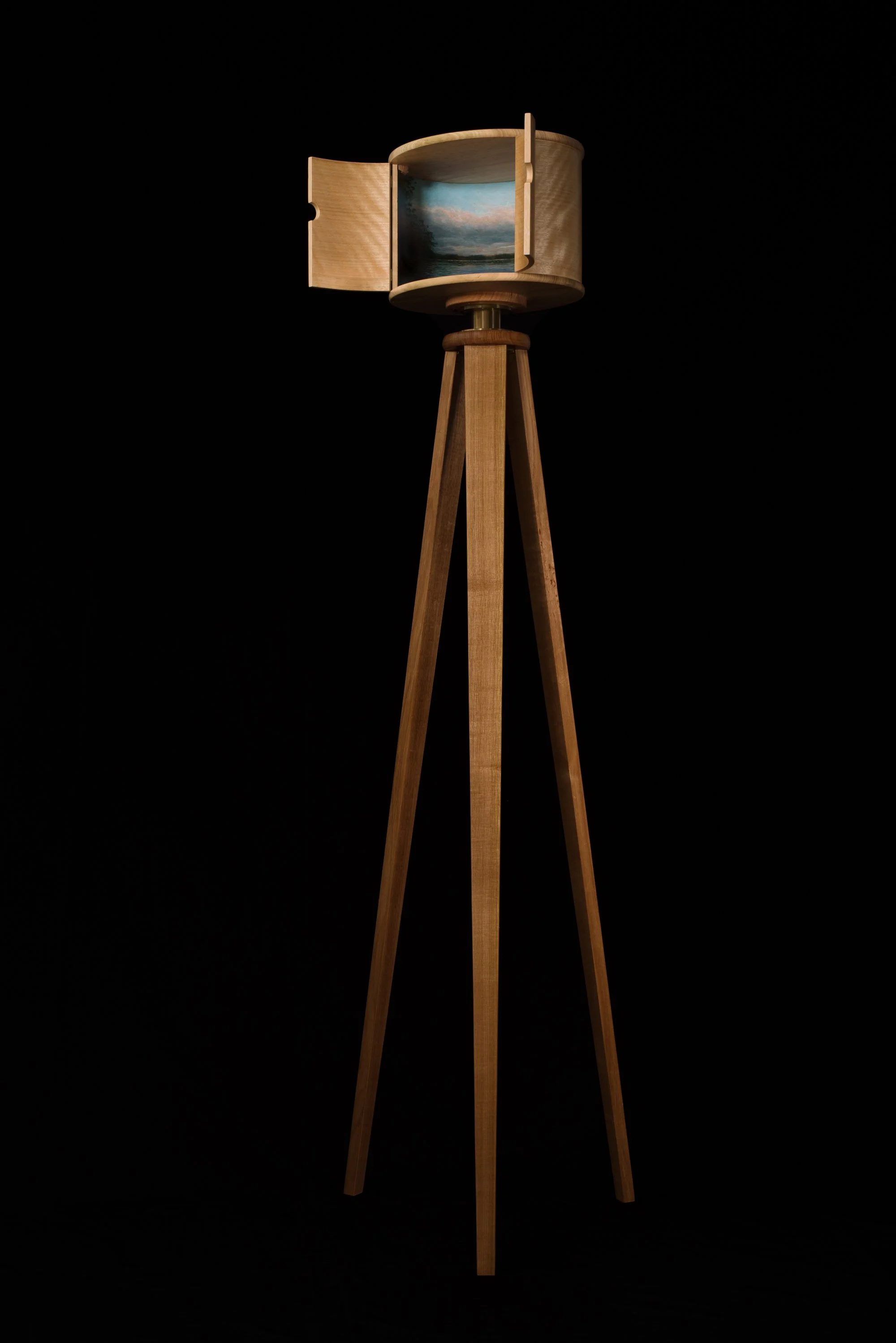
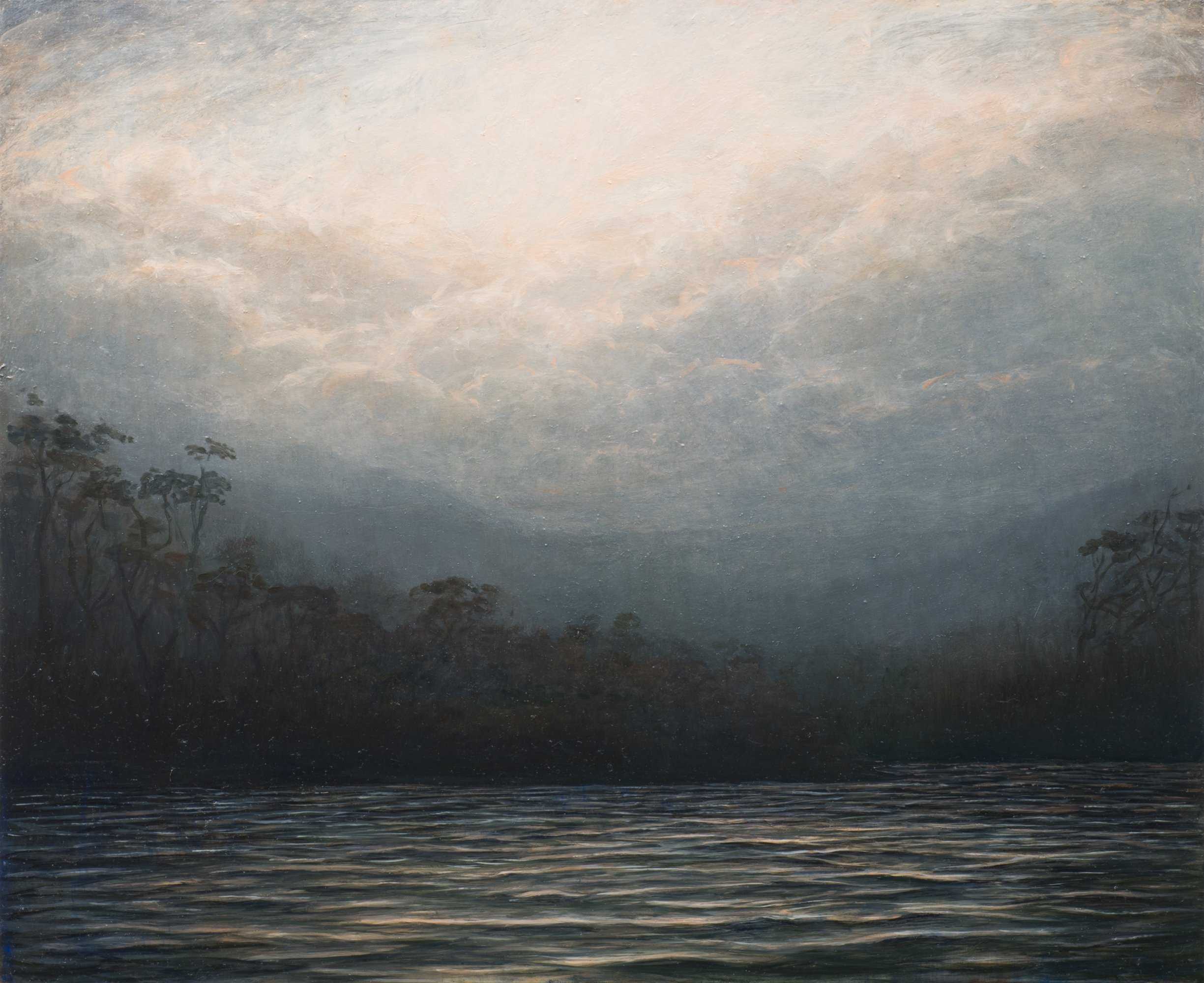
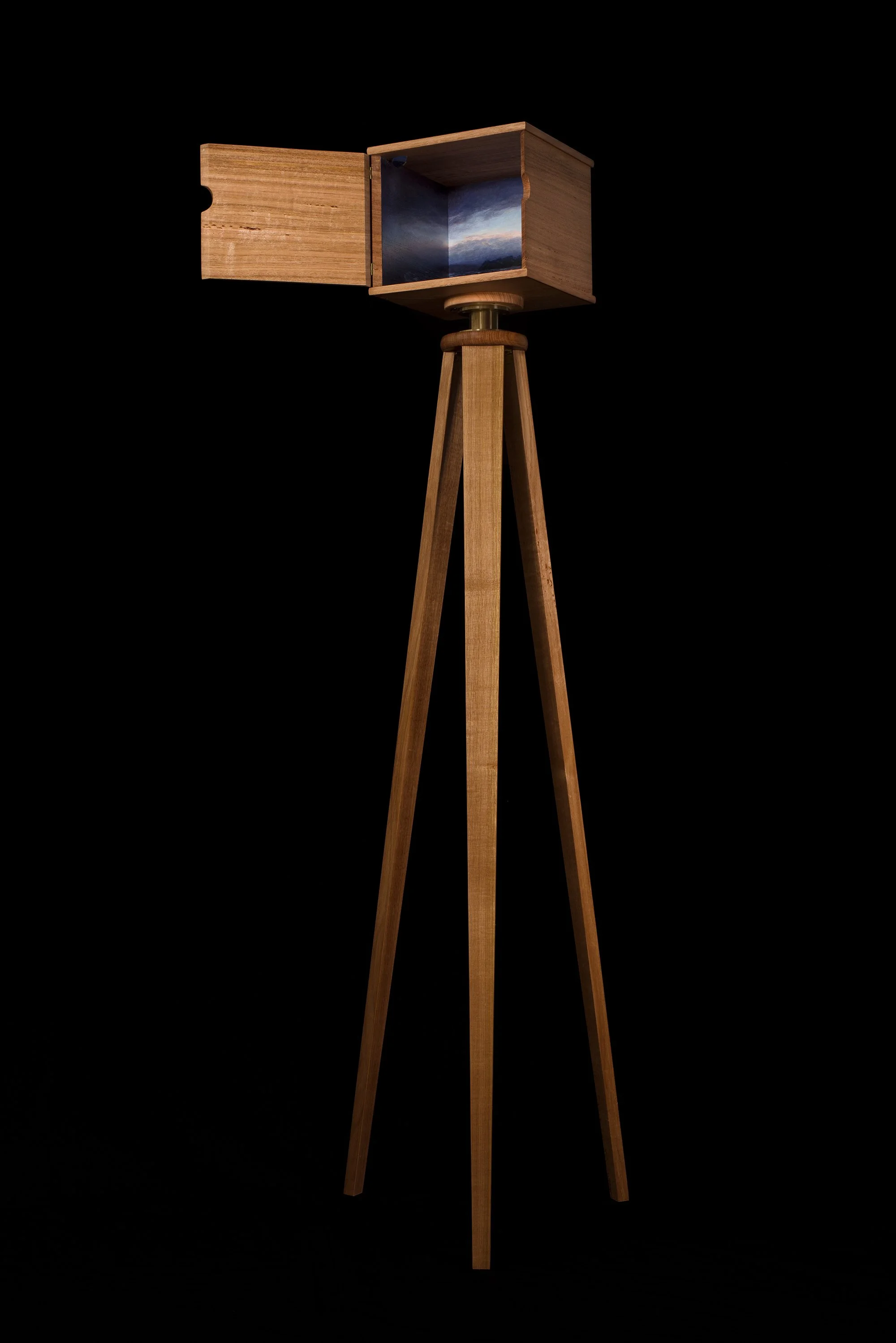
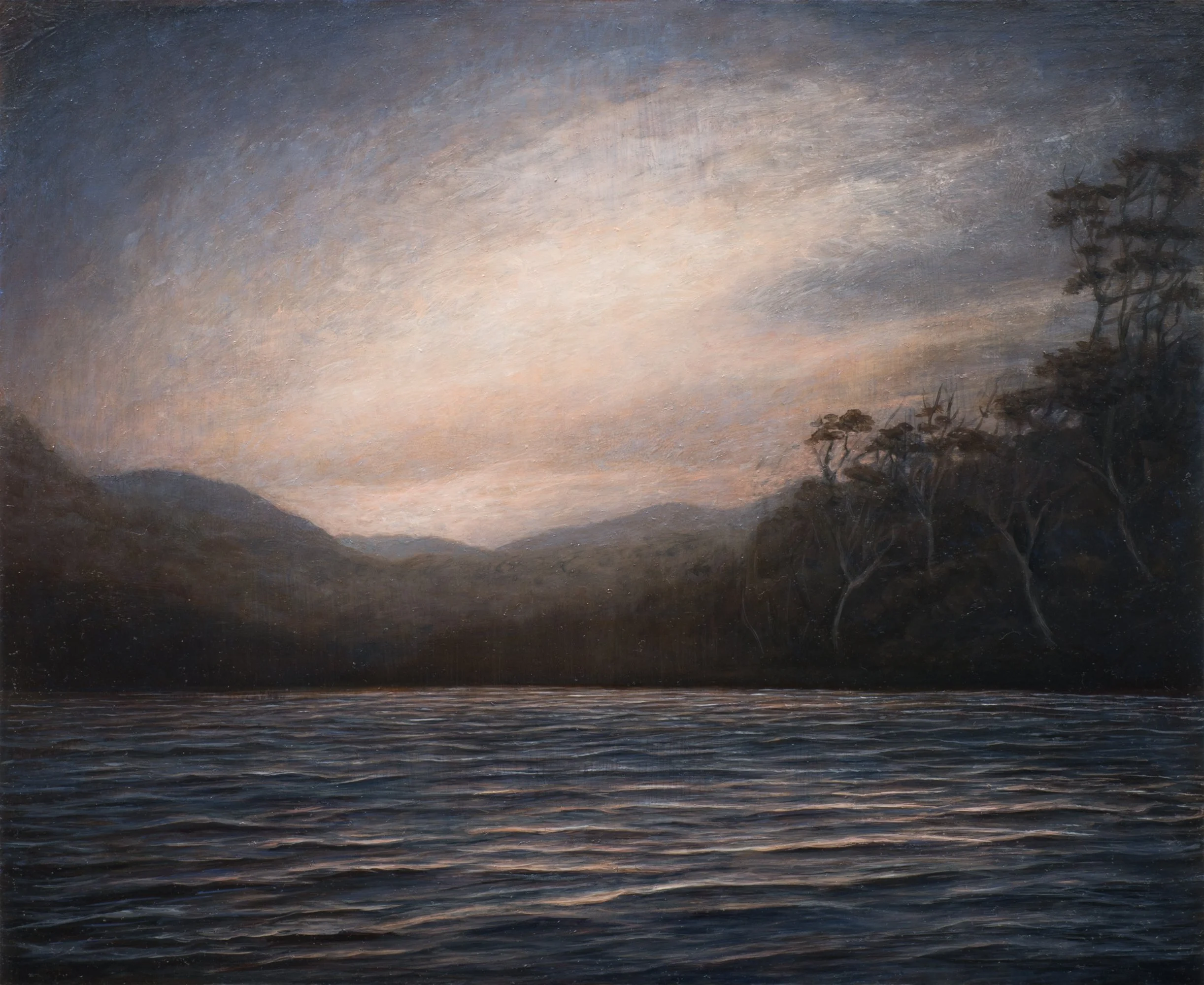
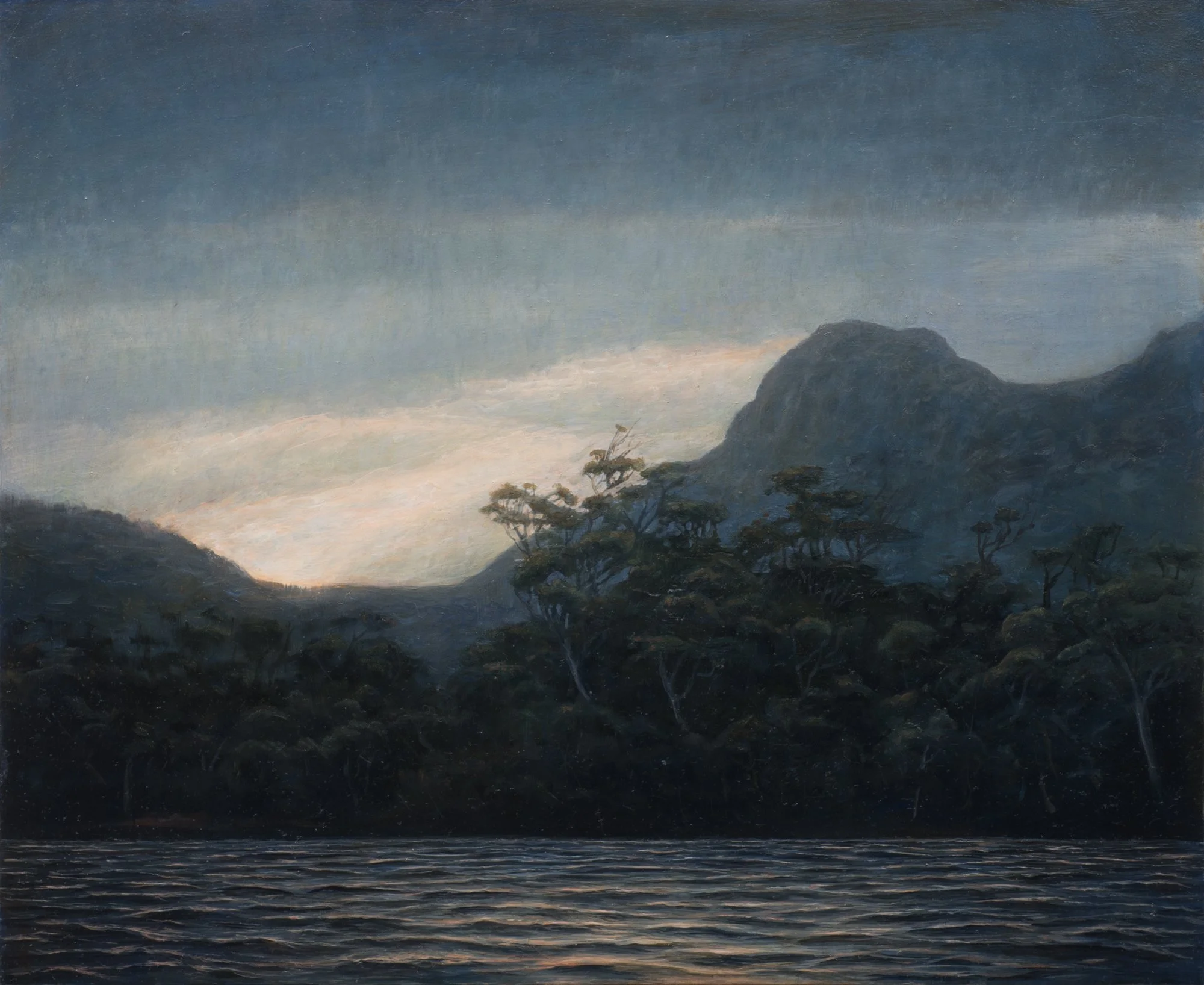
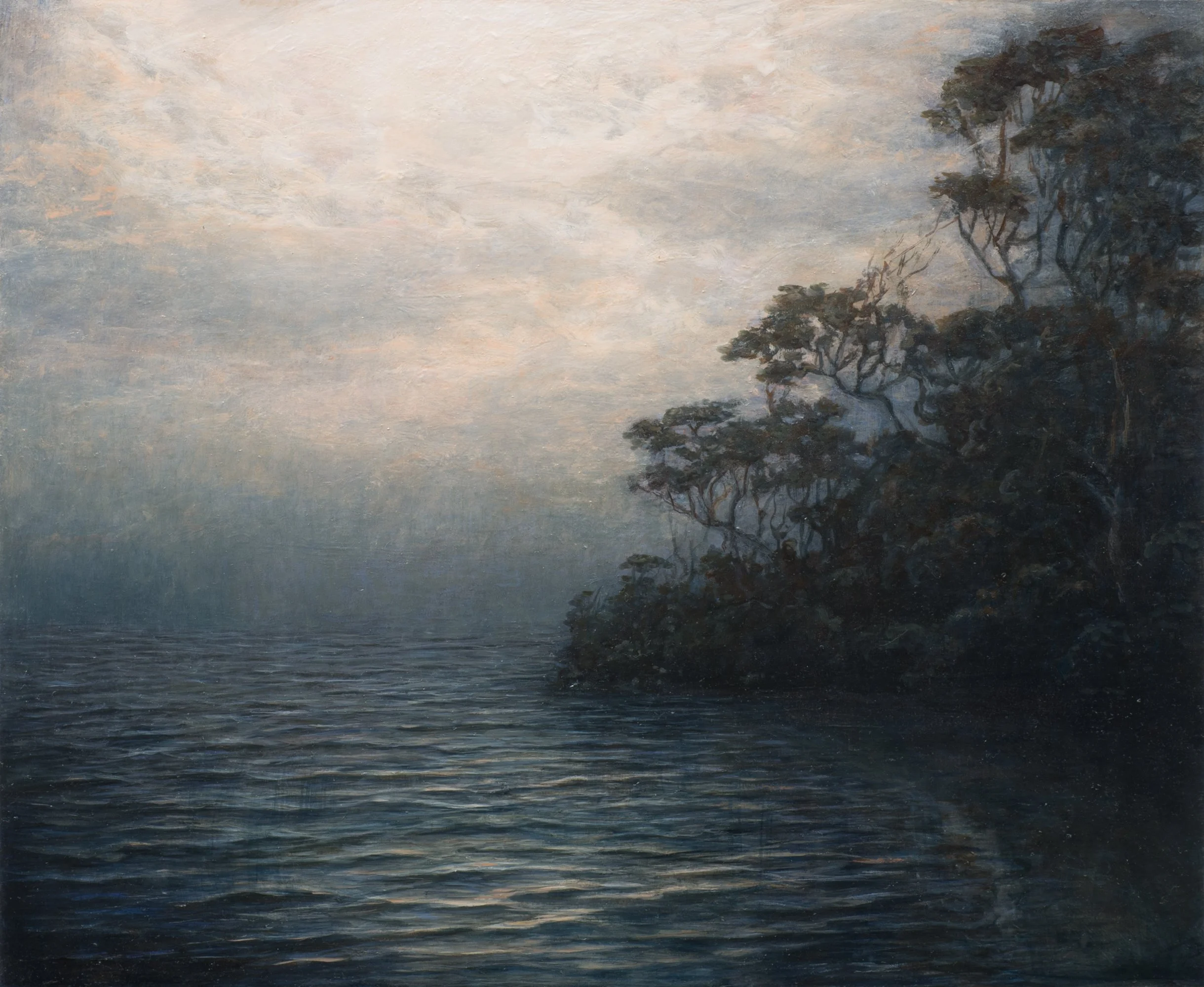
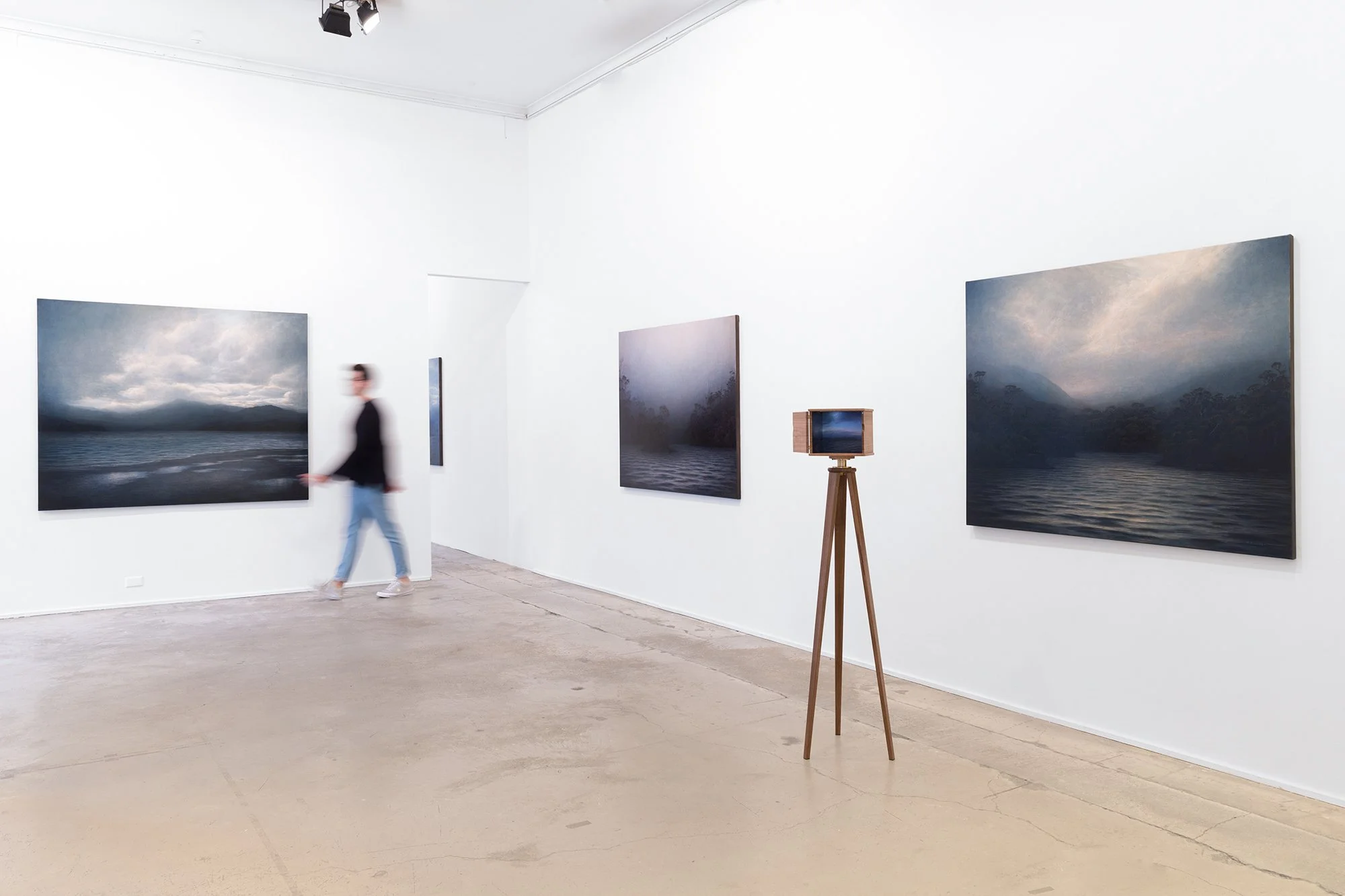
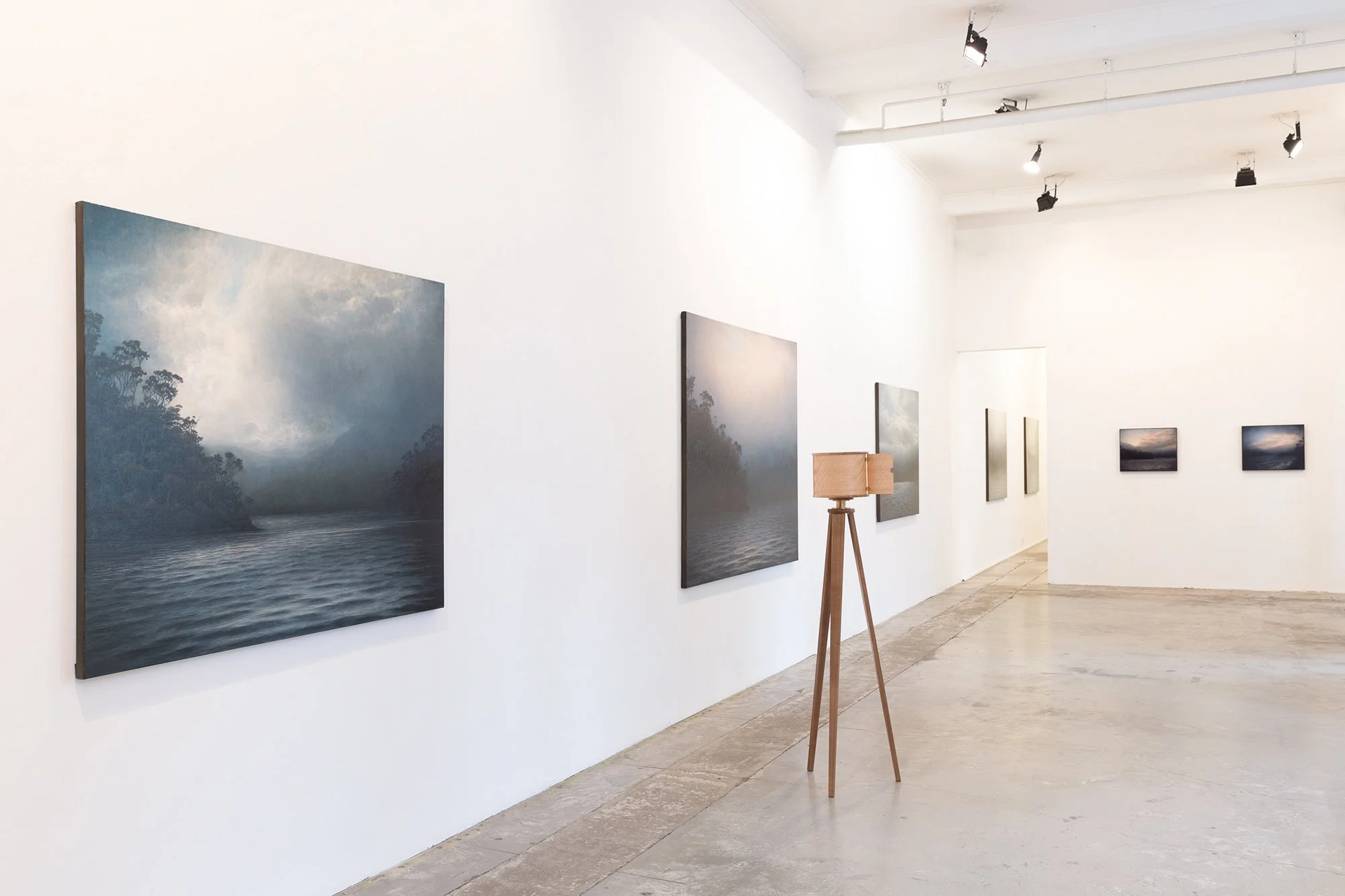
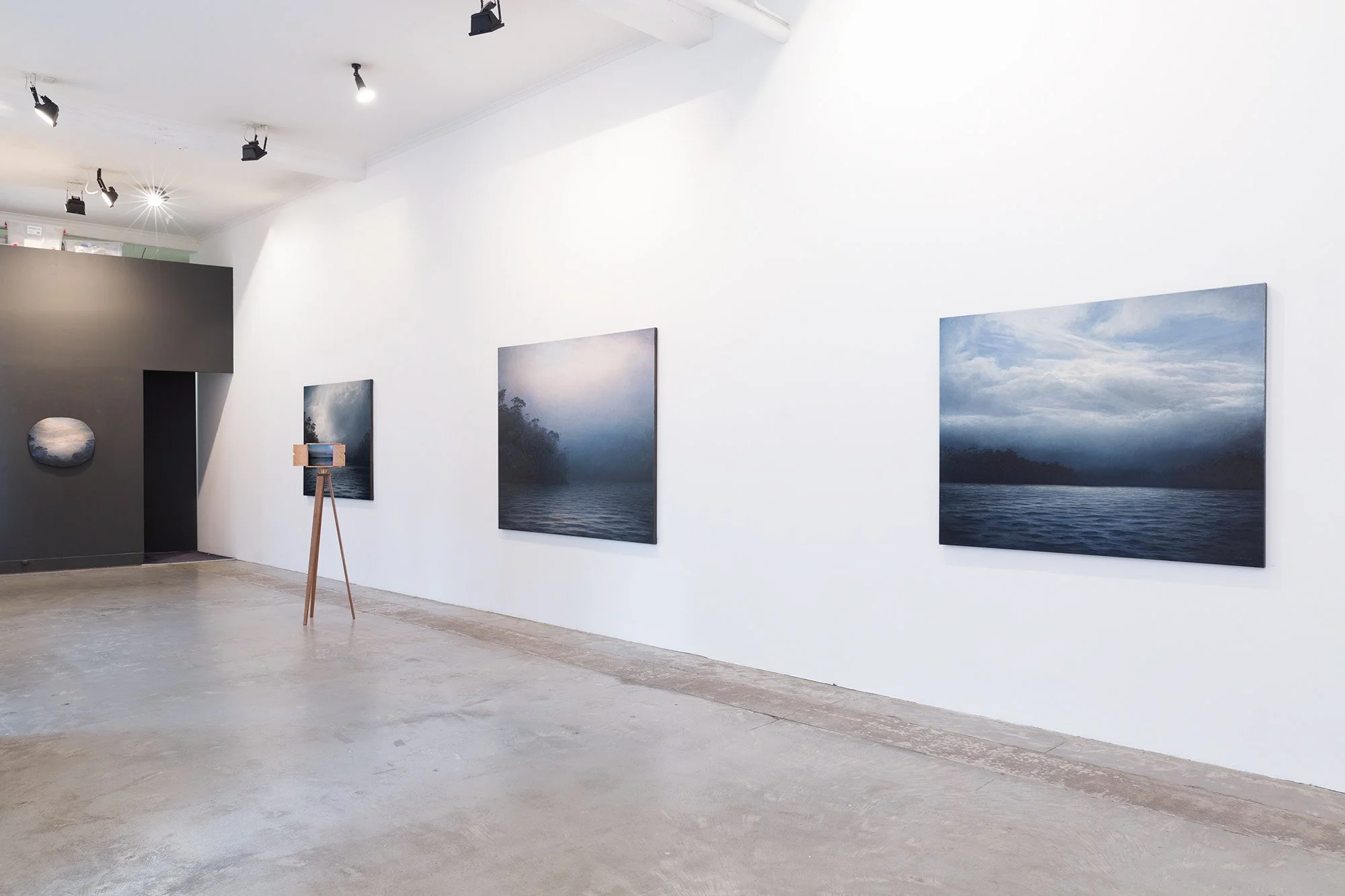
(Wooden tripods by Linda Fredheim, Steel plates by Gerhard Mausz)
-
Shelter
By Elli Walsh
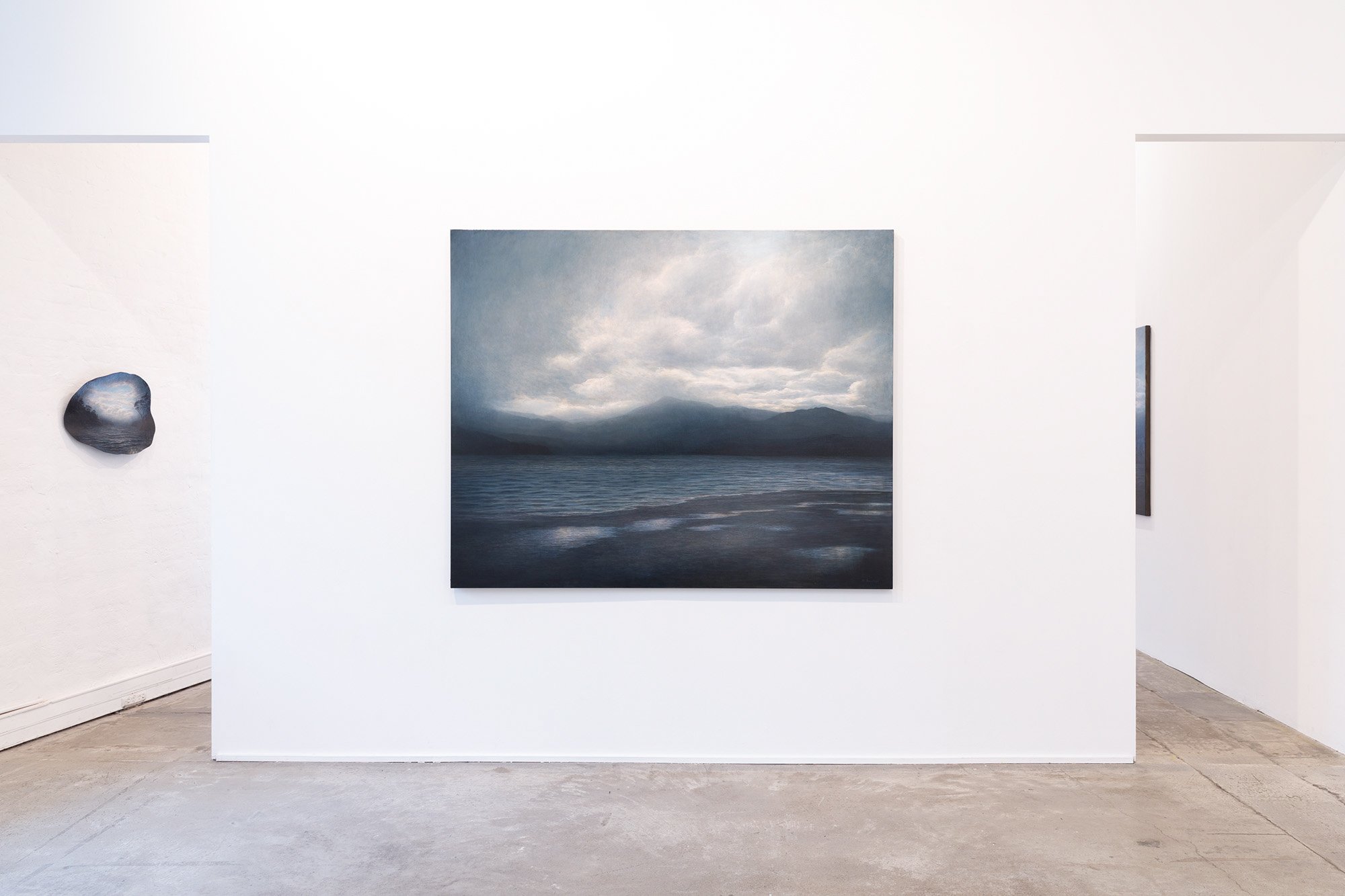
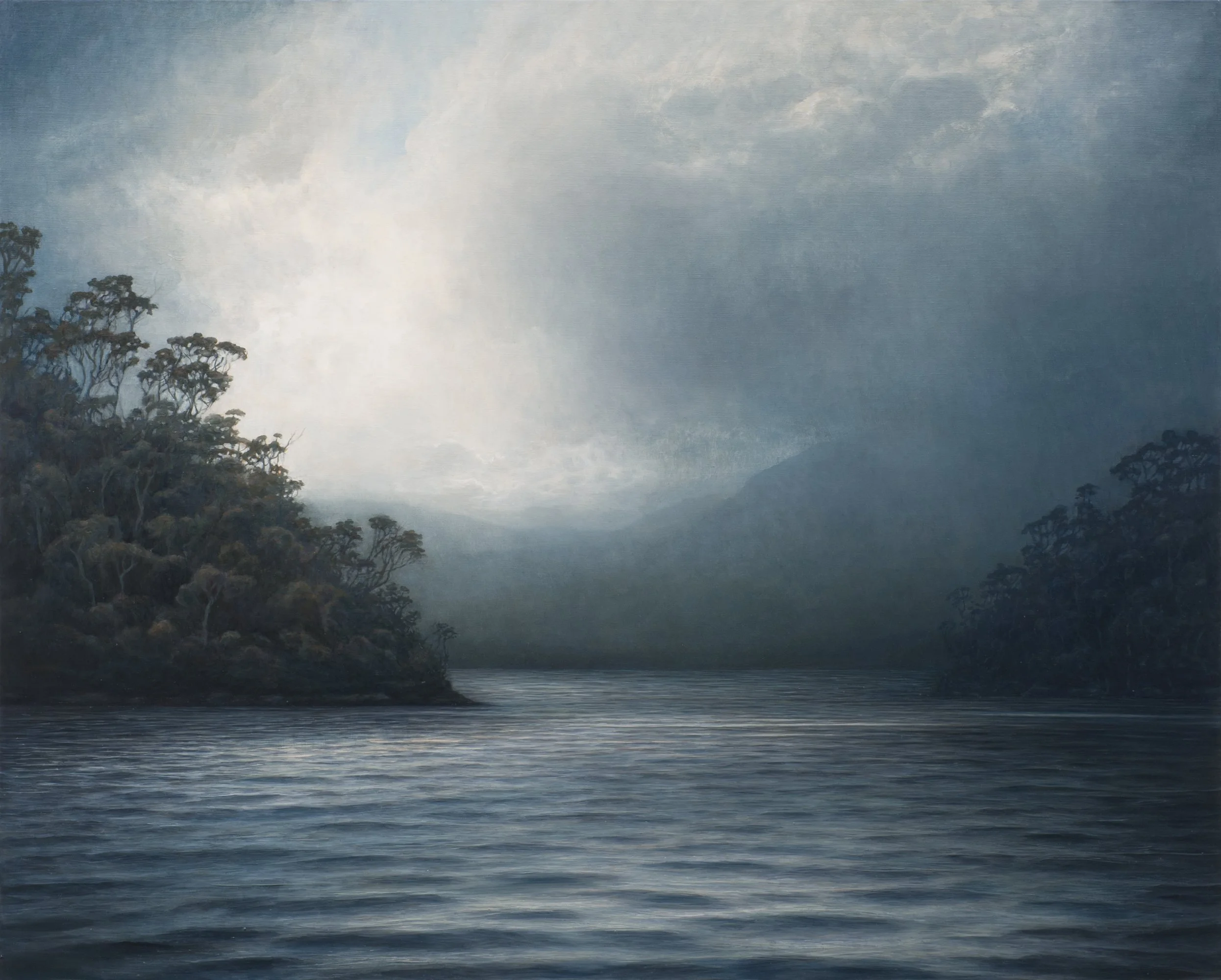
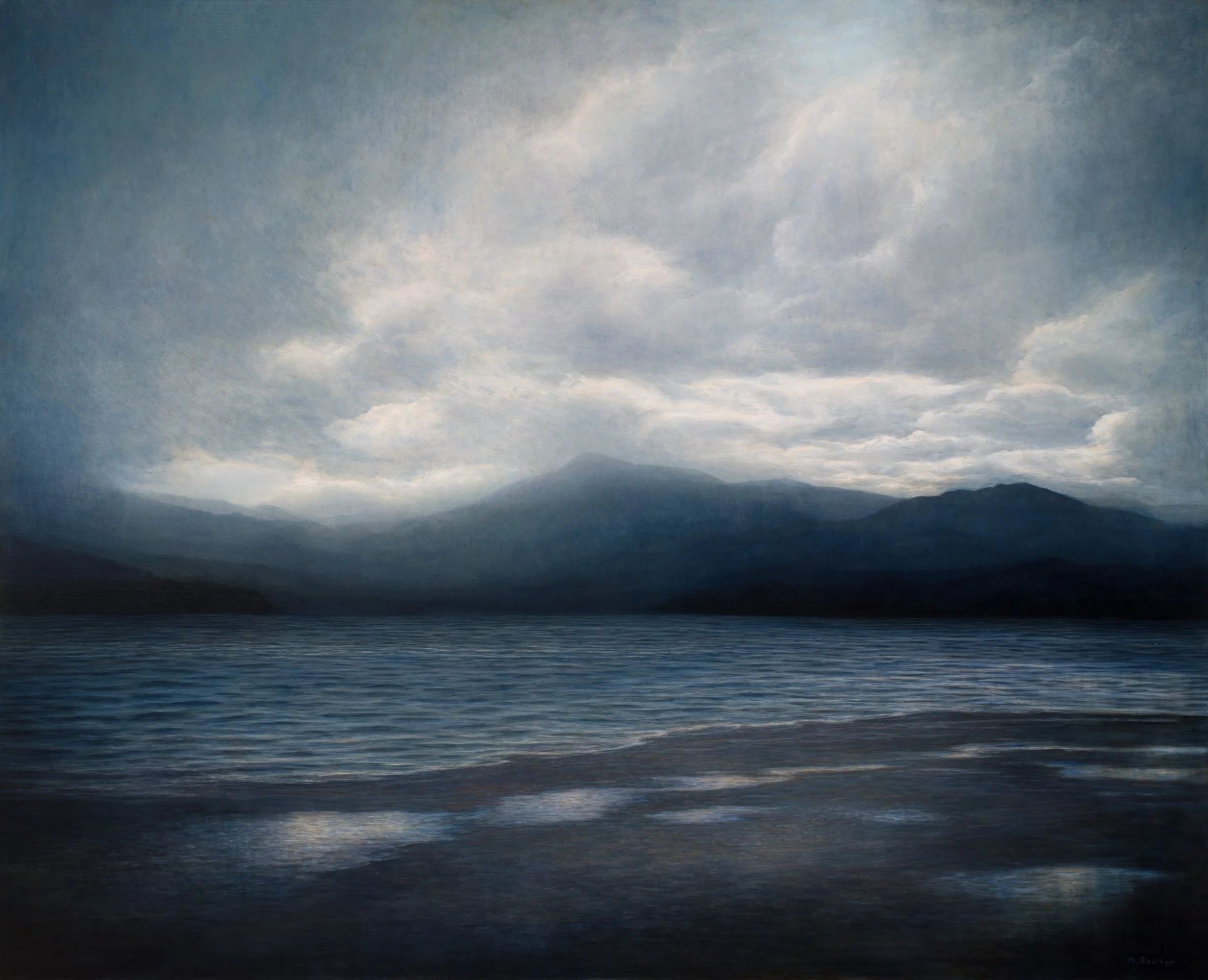
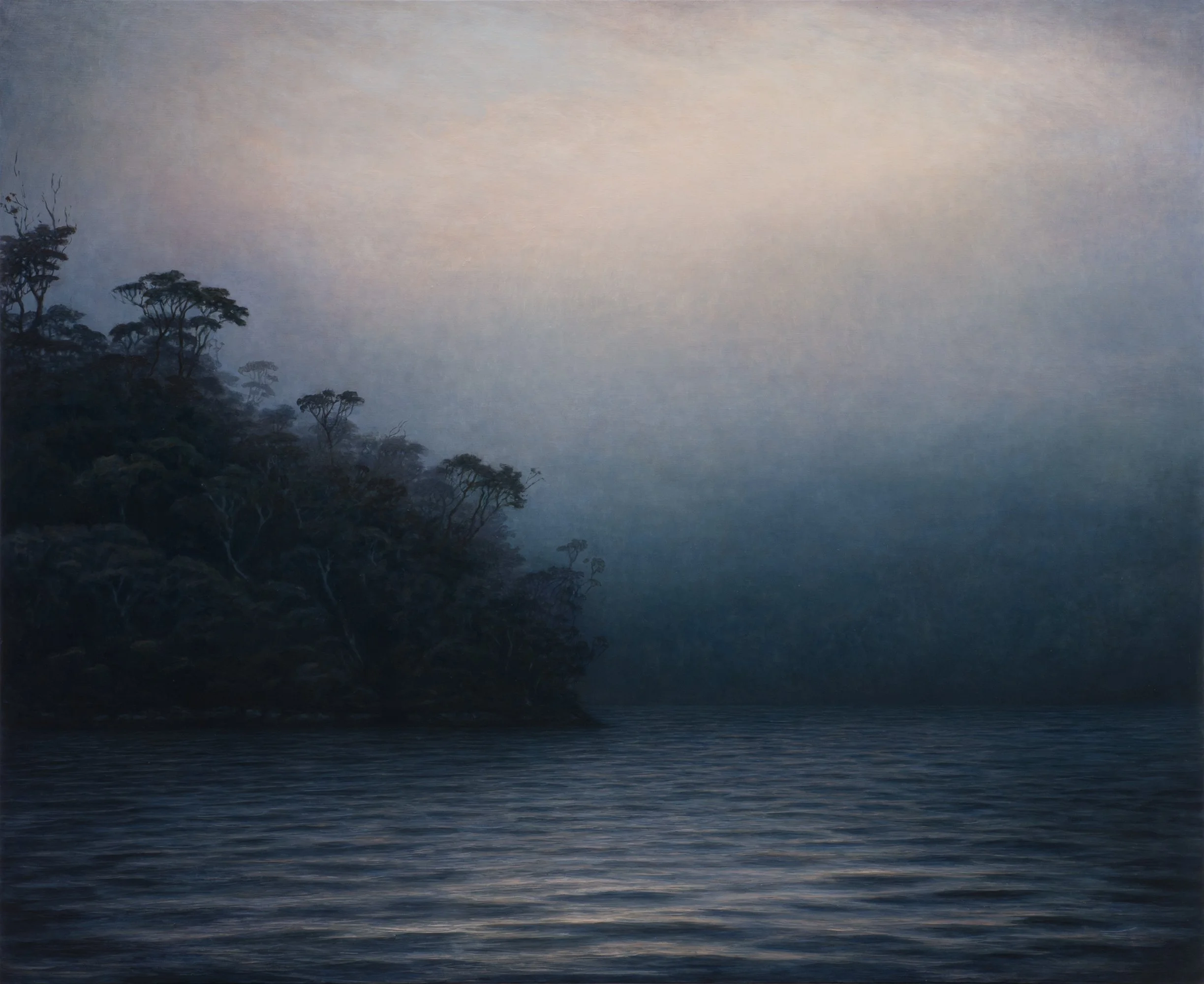
The masterful paintings of Tasmanian artist Michaye Boulter chart the paradoxical vastness and intimacy of the ocean. Having spent much of her life on the sea – due, in part, to her father being a fisherman and her husband a seafarer – Boulter draws from a wellspring of experience in capturing the transformative and transcendent tenor of the endless ocean. Her new paintings on linen, board and steel chronicle the artist’s enduring search for hidden aspects of self and place. Informed by recent trips around Southern Tasmania – the secluded bays and still waters of Southport Lagoon, Port Davey and Bruny Island – the artist attempts to conjure and clarify the elusive emotions felt along these wild and remote coastlines. The paintings represent, for Boulter, ‘sheltered places where I have felt a sense of privacy and intimacy. To be alone. To be silenced. To connect to that which is beyond self.’ She continues, ‘in revisiting these places, current emotions merge with past thoughts, dreams and feelings, reassuring myself of who I am and where I belong.’
With resonant Romantic sentiment, the paintings in ‘Shelter’ chart this psychological cycle of departure and return within liminal landscapes of endless possibilities. These silent seascapes appear suspended in time and space; still waters and soft land forms silhouetted against ethereal skies in an eternal unfolding moment. Yet at the same time Boulter’s beguiling scenes are charged with transience – the distant, hazy horizon like a void of receding recollections and fleeting experiences. Moving through each point-of-view vista, we glimpse scintillating interplays of the finite self and the sublime, infinite ocean, connecting us to the continuum of existence. ‘I look for simple truths in the landscape that may be universally experienced, are timeless and transcend place’, reflects Boulter, ‘in other words, I look for a landscape we hold deep within ourselves.’ Though inspired by particular places, the works convey emotion rather than topography, nurturing a union of psychological and physical space; self and place. ‘I use the landscape as a way of seeing into myself; these are internal landscapes seeking to find resonance in the external’, says the artist. She explores the ways we internalise our experiences of place and summon their memories as cornerstones of our identity.
Experimenting with color and tone, Boulter has developed a new palette of richer hues for this series – cobalt blues, transparent maroons and soft pinks capture the subtle transitions of evening light as it ripples across the water and darts through the clouds. At times the mood is introspective, quiet and melancholic, while other moments pulsate with raw reverie. Drawing from memory, photographs and imagination, the artist works patiently and intuitively over many months, applying countless layers of paint to create a depth and luminosity reflective of the mystery of the ocean – ‘I add and remove details, contemplate and listen, until I feel a truth is revealed; a hidden aspect of place and self.’
Significantly, this exhibition sees collaboration with two other Tasmanian artists: Gerhard Mausz, who crafted the hand beaten steel shapes, and Linda Fredheim, who made the freestanding timber forms containing Boulter’s painted landscapes. Larger in size than previous collections, Boulter’s paintings on steel bare the marks of time as though worn and warped by nature. They symbolise a portal into the past, as though viewing through a lens of time. Her timber tripods similarly encapsulate memories of landscape; the box form both protecting, revealing and concealing vignettes of personal experience. Here Boulter transforms the vast experience of nature into an intimate moment.
Channeling cherished memories and enduring affiliations, ‘Shelter’ visualises a profound synchronicity between the natural world and the human psyche. The works are an invitation into Boulter’s personal experience of self and landscape, an echoing of the internal within the external. ‘These paintings are about life and longing’, reflects Boulter, ‘about the intangible nature of beauty, the passing of time, and my attempt to find my place in it all.’